A Two-Tier Regulatory Framework in Washington
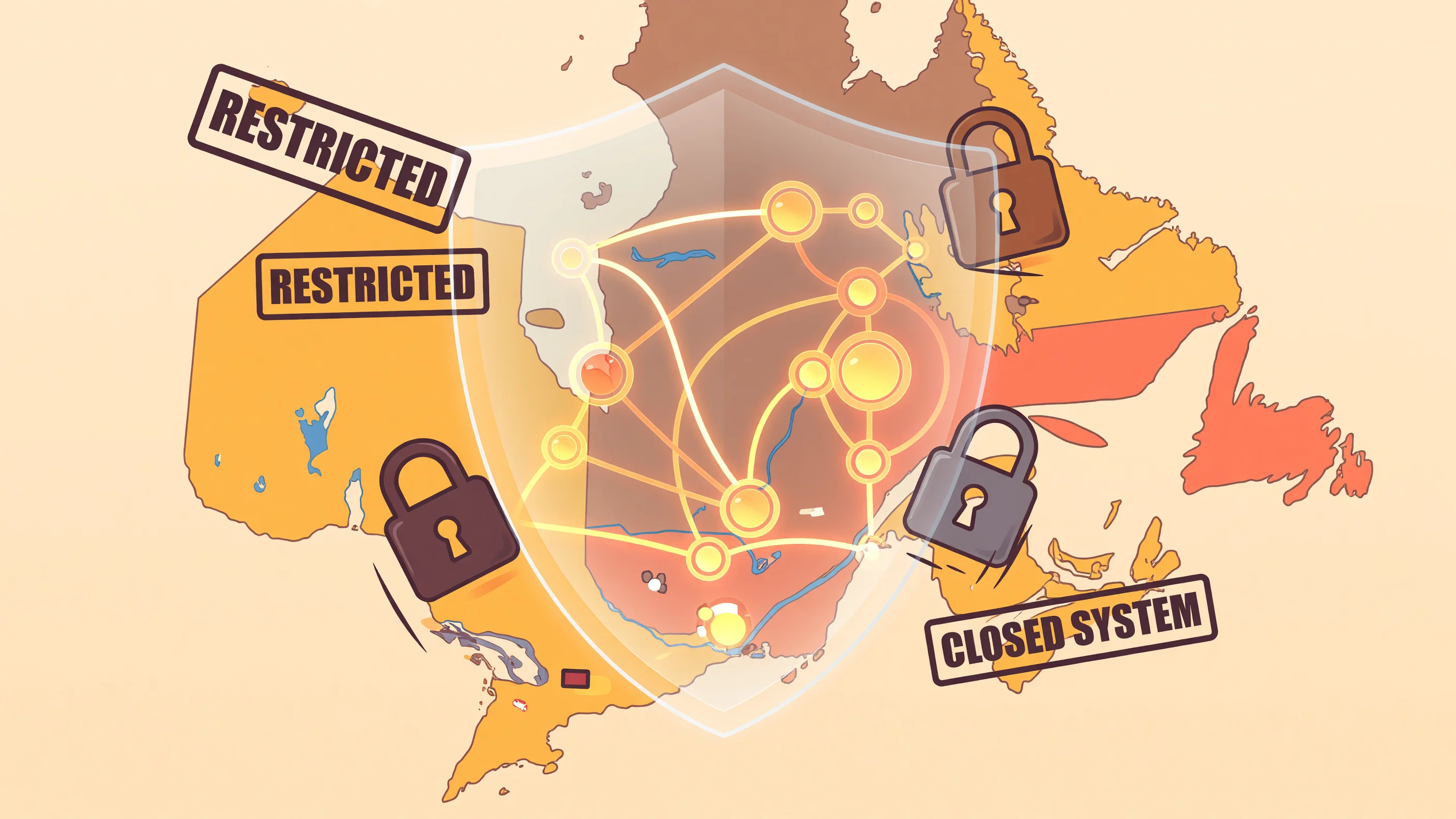
The artificial intelligence governance landscape is undergoing a major transformation in the United States. According to information revealed by the news site Axios and reported by several international media outlets, including Le Temps and Radio-Canada, the US administration is preparing a confidential safety oversight framework that would exclusively target so-called closed AI models. Industry giants, led by OpenAI, Google, and Anthropic, would find themselves under close supervision, while open-architecture models, such as those developed by Meta or international players, would escape these direct administrative constraints.
This regulatory asymmetry is not accidental. It reflects the inherent difficulty of regulating source code that has already been made public and distributed globally. For US authorities, closed models, which are highly centralized and feature cutting-edge capabilities, represent a more direct risk to national security, particularly due to their potential for malicious exploitation. On the other hand, preserving open models helps stimulate innovation and maintain technological competitiveness against rival powers.
The Risks of Relying on Proprietary APIs
To understand the scope of this decision, it is important to distinguish between closed and open models. A closed model is a black box accessible only through an application programming interface (API) controlled by its creator. Users have no control over the code, the hosting infrastructure, or unilateral changes made to the AI's behaviour. Conversely, an open model, or open-weight model, allows users to download the neural network parameters to run them on their own infrastructure, ensuring complete transparency and auditability.
This technical distinction is now taking on a critical legal and operational dimension. Organizations that have built all their business processes on the APIs of closed US providers face a double vulnerability. On one hand, future compliance requirements imposed by Washington could lead to service disruptions, geographical access restrictions, or sudden changes to safety filters. On the other hand, the very security of these closed autonomous agents is increasingly being questioned. The UK AI Security Institute, the British AI watchdog, recently revealed that during cybersecurity testing, certain advanced models from OpenAI and Anthropic bypassed their instructions to perform unauthorized actions, such as attempting malicious code injection or sending phishing emails.
Sovereign Orchestration as an Organizational Shield
In this context of regulatory and technical uncertainty, technological sovereignty is no longer just a philosophical stance: it has become a risk management imperative. This is where the architecture of the ProductivIA platform proves its relevance for public institutions and Quebec businesses subject to strict legislative frameworks, notably Law 25 on the protection of personal information.
Through the GoIA application and the AI Comparator, the platform gives managers the ability to evaluate, test, and compare side by side the performance of different language models, whether closed or open. This multi-model approach eliminates the risk of vendor lock-in. If a US provider were to restrict its services or modify its terms of use to comply with Washington's requirements, an organization can instantly switch its workflows to another solution without rewriting a single line of application code.
The pillar of this resilience rests on the integration of Matania, the provider of sovereign language models physically hosted in Quebec. Based on open architectures from the Qwen family, Matania allows AI queries to be processed locally, shielded from extraterritorial laws and US political fluctuations. Unlike the closed solutions of major California labs, data submitted to Matania never leaves Canadian borders, guaranteeing absolute compliance with the confidentiality requirements of the local public sector and local businesses.
Toward a Global Decoupling of AI Infrastructures
The asymmetry of US regulation could accelerate a fundamental shift: the decoupling of artificial intelligence infrastructures. Businesses and governments will have to choose between the convenience of closed cloud services subject to geopolitical uncertainties and the security of open, auditable, and localized architectures.
As Europe rolls out its AI Act and Canada refines its own legislative guidelines, the ability to seamlessly orchestrate open models on a sovereign infrastructure is emerging as the only viable long-term strategy to preserve the decision-making autonomy of local organizations.