The Price Inflation of AI Hardware
The technology industry is undergoing a major transition, marked by the systematic integration of dedicated artificial intelligence chips into personal computers. However, this evolution is accompanied by a substantial price increase for consumers and organizations. Microsoft's recent announcements regarding its Surface Laptop and Surface Pro lineups, now equipped with Qualcomm's Snapdragon X2 processors, illustrate this trend. According to analyses published by the specialized media outlet Engadget, the prices of these new devices show a 50% to 60% increase compared to previous generations, setting the entry price at 1,499 US dollars.
This financial barrier is compounded by a profound transformation in software publishers' business models. Microsoft has introduced pay-as-you-go pricing for its new autonomous agent, Copilot Cowork, billing for each executed task based on the computing power consumed, in addition to the required monthly subscription. This double pressure, combining the purchase of high-end hardware with transactional billing for application services, redefines the total cost of ownership of digital productivity tools.
The Ecological and Economic Impasse of Forced Upgrades
For school boards, small and medium-sized enterprises, and public institutions, this hardware arms race poses an ethical and financial dilemma. The announced end of support for Windows 10, combined with Windows 11's strict hardware security requirements, notably the presence of a TPM 2.0 chip, risks condemning millions of perfectly functional computers to the scrap heap.
According to the United Nations University's Global E-waste Monitor, the production of technological waste is growing at an alarming rate, reaching historic highs every year. The extraction of rare earth elements and the manufacturing of latest-generation processors represent the bulk of an IT device's carbon footprint. Prolonging the useful life of existing hardware therefore proves to be the most effective lever for reducing the environmental impact of digital technology, well before any software optimization.
On an economic level, forcing the renewal of entire computer fleets to access basic algorithmic assistance features is an expense that is difficult to justify for public and school administrators, who are often subject to strict budget constraints.
The Sovereign Alternative: Extending Hardware Life, Localizing Intelligence
Faced with this linear consumption model, Quebec's sovereign ecosystem offers a circular and modular approach. This vision is built around two complementary solutions that decouple application performance from hardware novelty.
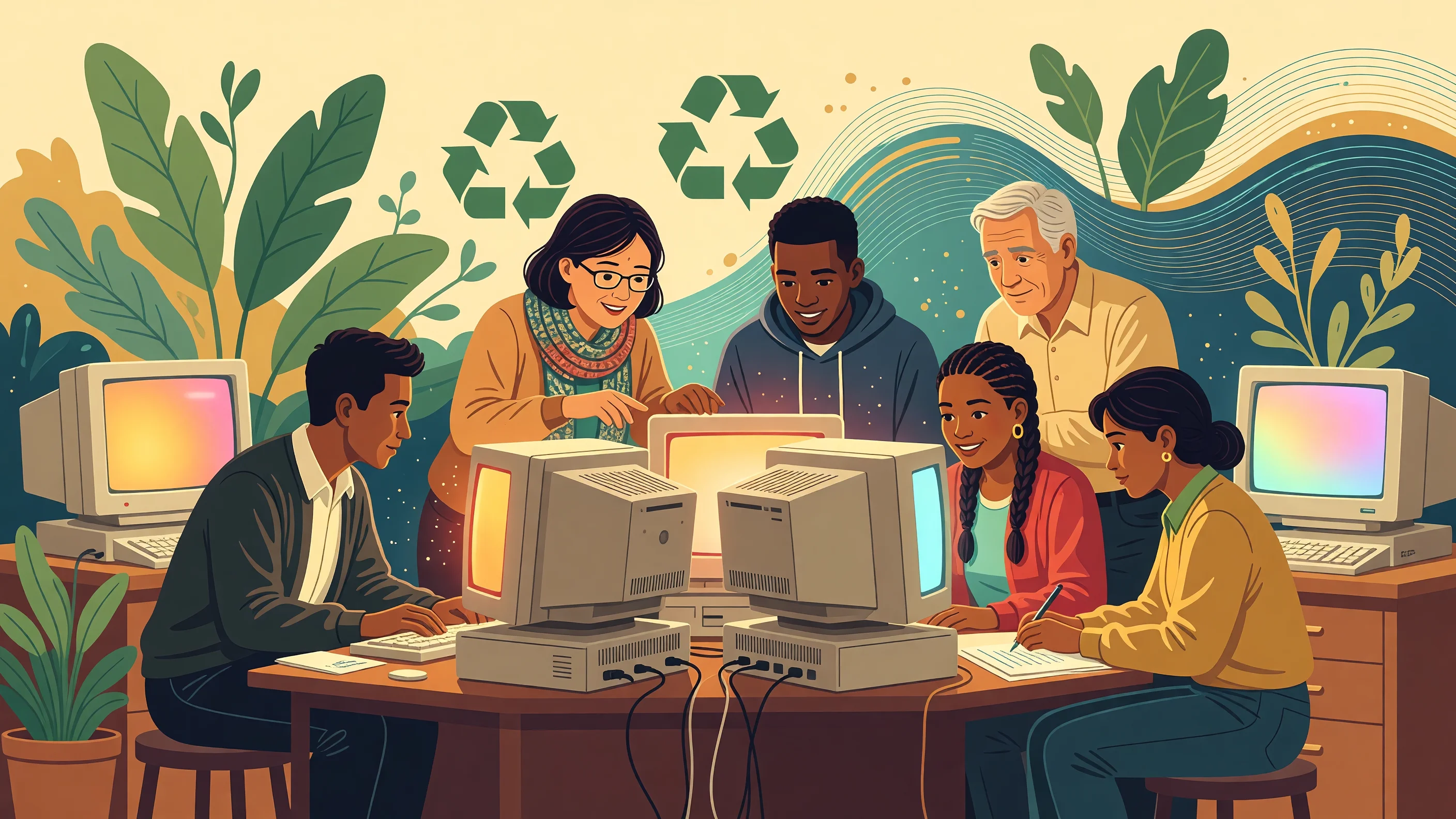
On one hand, the native operating system Boréal-OS offers a second life to computers declared obsolete by the requirements of commercial systems. By installing directly on the hard drive, this lightweight and secure Linux distribution bypasses the constraints of proprietary chips or recent processors. It allows school or corporate computer fleets to remain smooth, secure, and functional for an additional five to ten years, thereby avoiding massive hardware investments.
On the other hand, the ProductivIA application platform, accessible directly from the browser of these rehabilitated machines, democratizes access to artificial intelligence tools without requiring expensive remote servers or latest-generation chips. Thanks to the Local AI application, the platform leverages the standardized WebGPU API. This technology allows the browser to directly access the computing power of the device's existing graphics card to run language models locally.
Transparent and Eco-responsible Data Management
Local execution via the Local AI application ensures that no text or document data leaves the computer's memory. This isolation ensures strict compliance with the requirements of Law 25 in Quebec, effectively eliminating the risks associated with the cross-border transit of personal information to infrastructures subject to extraterritorial laws.
For needs requiring shared storage, ProductivIA's Cloud application makes it possible to centralize and seamlessly consult all files stored within the organization's silo. Users thus retain complete visibility over the location of their data, in contrast to the opaque cloud architectures of major technology providers.
By combining hardware rehabilitation through Boréal-OS with the optimized software execution of ProductivIA, organizations can adopt artificial intelligence in a progressive, ethical, and economically viable manner, without undergoing the forced upgrade cycles imposed by the market.
Going Further
The dependence of artificial intelligence on centralized and expensive hardware infrastructures raises fundamental questions about equitable access to cutting-edge technologies. Organizations will have to determine whether the added value of autonomous agents billed per task justifies abandoning their infrastructure sovereignty and accelerating their ecological footprint.