The Illusion of the Dedicated Physical Device
The artificial intelligence industry is going through a paradoxical phase of materialization. While the power of language models was built on dematerialization and cloud computing, major players in the sector are making a strategic shift toward hardware. The recent departure of Paul Meade, head of Apple's Vision Pro mixed reality headset, to lead OpenAI's new hardware division, illustrates this desire to design proprietary physical devices. However, this hardware race is running into harsh economic and geopolitical realities.
At the same time, the costs of the electronic components essential to these new machines are skyrocketing. According to revelations by the Financial Times, Apple had to request a waiver from the US administration to buy memory chips from Chinese supplier ChangXin Memory Technologies (CXMT), despite it being blacklisted by the Pentagon. This hardware dependency and the dramatic rise in random-access memory (RAM) prices directly impact consumers and organizations, forcing a general increase in the prices of computers and tablets. In the face of this escalation, a fundamental question arises: must digital empowerment necessarily require the acquisition of new proprietary devices?
The Obsolescence Crisis and the Cost of Dependency
This strategy of forced IT hardware renewal poses a long-term viability problem. To run complex artificial intelligence models locally, operating system developers are imposing increasingly strict hardware requirements, such as TPM 2.0 security chips or latest-generation neural processing units (NPUs). According to forecasts from the analyst firm Gartner, shipments of AI-equipped PCs are expected to grow exponentially, pushing organizations into a premature renewal cycle for their equipment.
Yet, the environmental cost of this transition is colossal. The UN's Global E-waste Monitor reminds us that manufacturing computer hardware accounts for the majority of the digital sector's carbon footprint. Extending the useful life of existing machines is infinitely more effective at reducing this footprint than any software optimization. Linking access to artificial intelligence to the purchase of dedicated devices or high-end chips therefore represents a step backward in terms of digital sobriety.
The Alternative of Dematerialization in the Browser
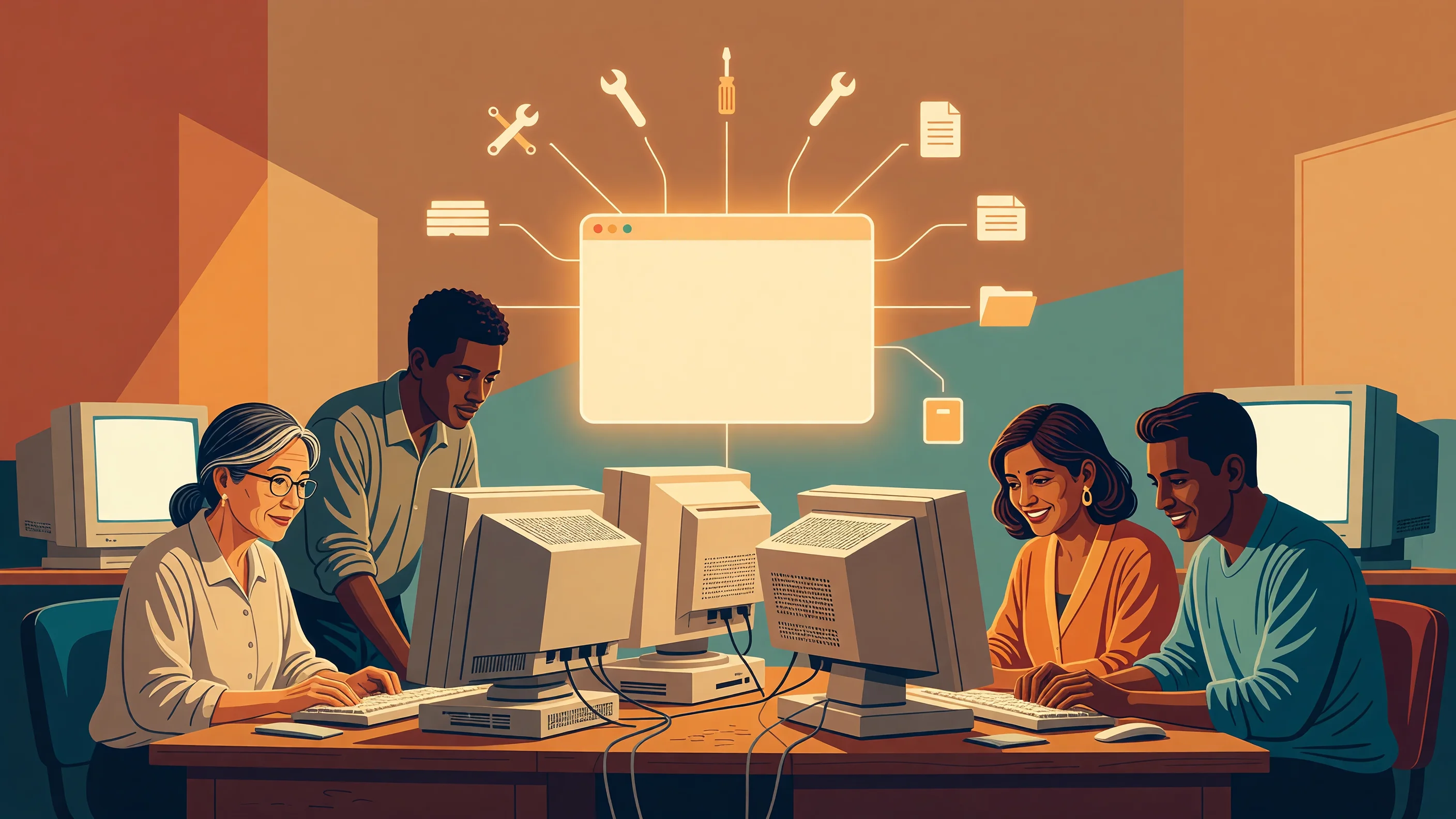
This is where a radically different approach comes in, based on open web standards. Rather than requiring excessive local computing power and proprietary chips, the architecture of the Quebec-based ProductivIA platform demonstrates that a simple standard web browser is enough to orchestrate intelligent agents and execute complex tasks.
At the heart of this philosophy, ProductivIA's Assistant application acts as an orchestrator. Instead of overloading the user's machine, the Assistant uses a standardized mechanism called assistant_services to coordinate the platform's various applications. Whether writing a document, querying a database, or scheduling a calendar, the intelligence resides in the software architecture and not in the device's silicon.
Similarly, the GoIA application allows users to compare and query different language models, whether proprietary or sovereign like Matania, directly from a lightweight web interface. Users do not need a latest-generation processor to benefit from AI advancements: the platform handles model calls seamlessly, optimizing costs and computing resources in the background.
This approach is part of a coherent sovereign stack. For organizations looking to extend the lifespan of their hardware while ensuring data security, the combination is immediate: the native Boréal-OS operating system breathes new life into computers declared obsolete by major software developers, while the ProductivIA platform runs in the browser to provide all necessary productivity tools, powered locally or by the sovereign Quebec engine Matania.
Toward Digital Sobriety in Computing
The race for physical devices launched by tech giants is primarily driven by vendor lock-in and ecosystem control. By shifting the frontier of innovation to hardware, these companies create an artificial dependency that strains the budgets of public institutions, schools, and businesses.
True digital sovereignty does not mean manufacturing more gadgets, but rather mastering software architecture to make intelligence accessible on the equipment we already own. By prioritizing the standard web and intelligent orchestration, it becomes possible to reconcile technological progress, data protection, and environmental responsibility.