A Wake-Up Call for Strategic Autonomy
The recent decision by the US administration not to renew the Canada-United States-Mexico Agreement (CUSMA) in its current form, as reported by several major media outlets including the CBC and Le Devoir, marks a major geopolitical turning point. By placing this agreement under strict annual reviews, Washington is introducing structural instability to the core of North American trade relations. This warning shot serves as a reminder of an often overlooked reality: depending on external partners, no matter how close, carries inherent vulnerability.
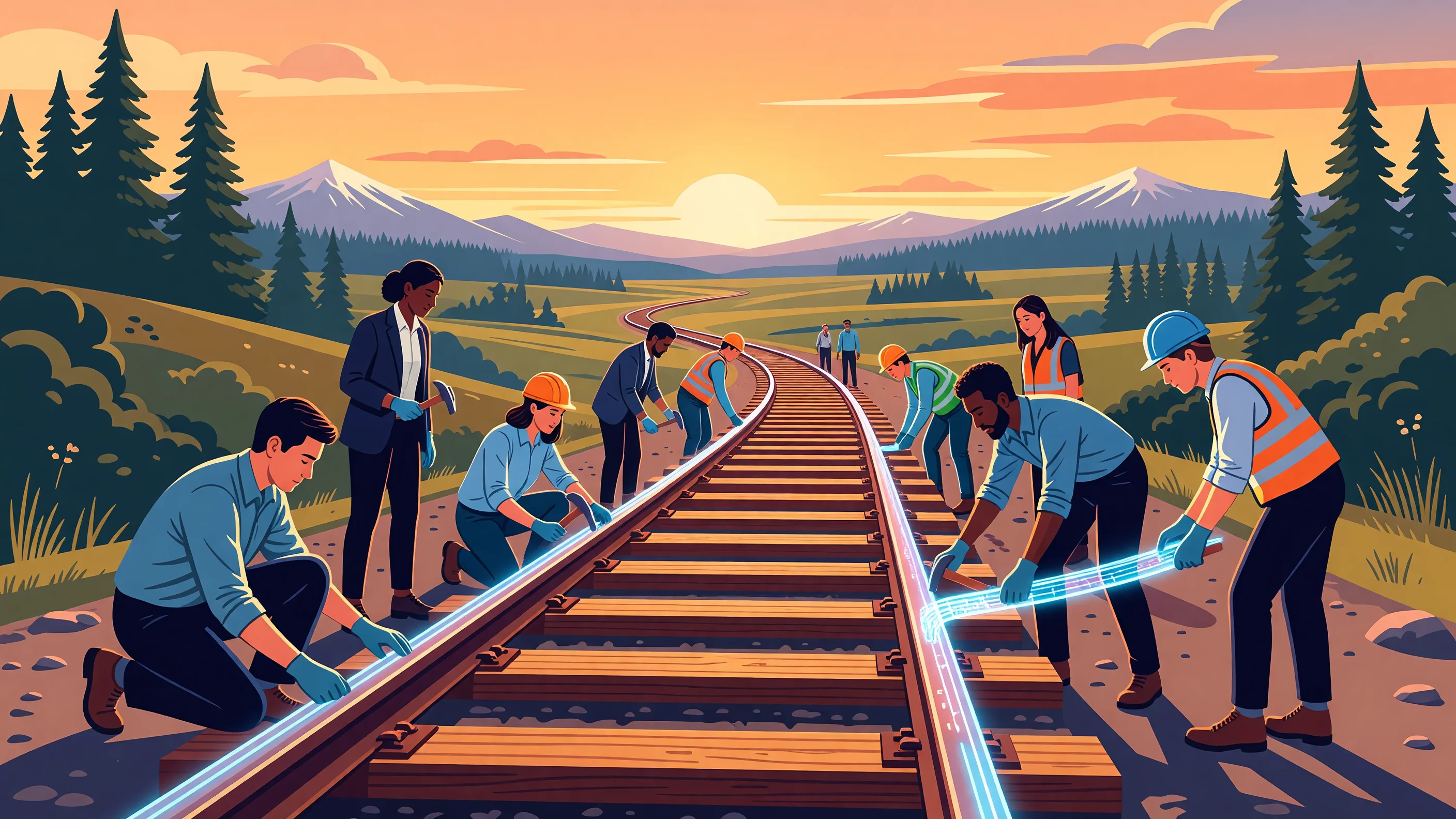
In his Canada Day address, Prime Minister Mark Carney noted that major national infrastructure projects, such as the transcontinental railway in 1885, have historically forged the country's unity and independence. Today, artificial intelligence and data processing constitute the new railway of the digital age. Yet, laying tracks on operating systems and cloud infrastructures entirely controlled by foreign entities is equivalent to handing over control of the switches to jurisdictions subject to their own political and economic imperatives.
The Dangers of Extraterritorial Technological Dependence
Contemporary trade tensions are no longer limited to tariffs on physical goods. They now encompass intellectual property, data flows, and access to computing power. For Quebec businesses and public institutions, relying exclusively on American tech giants (hyperscalers) presents major operational and legal risks.
The first of these risks lies in the application of extraterritorial laws. As documented in an analysis report by the Congressional Research Service, legislation such as the CLOUD Act and Section 702 of the Foreign Intelligence Surveillance Act (FISA) allows US authorities to demand access to data stored on servers, even if they are physically located abroad. For organizations subject to Quebec's Law 25, which strictly regulates the cross-border transfer of personal information, this situation creates a permanent compliance conflict. The obligation to conduct a privacy impact assessment (PIA) for every transfer outside the province makes using foreign-centralized tools increasingly complex and risky.
Furthermore, the centralization of AI infrastructure creates a single point of failure. Unilateral export control decisions, such as those that temporarily restricted international access to certain advanced AI models, demonstrate that a technological tap can be turned off at any time by a foreign government. In the face of these uncertainties, building a resilient local digital infrastructure is no longer a theoretical option, but a national security necessity.
The Integrated Sovereign Stack: From Machine to Model
True technological autonomy cannot be negotiated piecemeal. It requires a holistic approach capable of securing every layer of the working environment. Quebec's sovereign ecosystem offers a structured response to this challenge through three complementary and independent levels: the operating system, the application environment, and the artificial intelligence engine.
At the hardware level, sovereignty begins with control over the physical machine. The hardware requirements of Windows 11 and the announced end of support for Windows 10 threaten to make entire computer fleets obsolete within school boards and municipalities. By installing Boréal-OS, a native Linux distribution developed in Quebec, organizations can extend the useful life of their computers by several years. This open-source OS, free of commercial telemetry, ensures that the machine itself does not exfiltrate any behavioural data abroad.
On this secure hardware foundation sits the ProductivIA application platform. Running entirely in the browser, it eliminates the need to maintain complex local software dependencies, thereby reducing the attack surface against cyberthreats. Thanks to the Nuage application, every document and interaction remains confined within the organization's silo. Transparency is absolute: users know exactly where their data is stored, ensuring natural compliance with Law 25 requirements.
Finally, the cognitive layer is powered by Matania, a language model provider physically hosted in Quebec. Seamlessly integrated into the ProductivIA orchestrator, Matania processes the most sensitive AI queries without ever letting data cross Canadian borders. Administrators can configure their applications to use this local engine, avoiding the application of US extraterritorial laws while maintaining optimal performance.
Toward a Digital Infrastructure of Public Interest
The uncertainty surrounding the future of CUSMA demonstrates that trade agreements are not enough to guarantee the operational stability of organizations. To build a resilient economy, Quebec must treat its digital infrastructure with the same rigour as its electricity or transportation networks.
The transition toward sovereign, composable solutions, combining the hardware recycling of Boréal-OS, the application flexibility of ProductivIA, and the local security of Matania, offers a pragmatic path forward. It allows public institutions and businesses to escape foreign technological lock-in while managing their environmental and financial footprint.