The Marketing Promise of Seven-Year Updates
For some time, a new battle has been raging in the smartphone and computer industry: that of software longevity. Several major manufacturers, such as Google and Samsung, have proudly announced that their latest devices will benefit from seven full years of operating system and security updates. On paper, this initiative seems to mark a historic turning point toward more responsible and sustainable consumption.
However, real-world conditions quickly temper this enthusiasm. As highlighted in an analysis published by the specialized media outlet Android Authority, many users plan to abandon their devices long before reaching this theoretical limit, often as early as the fourth year. Between the inevitable degradation of chemical batteries, the prohibitive cost of physical repairs, and the gradual exclusion of the latest artificial intelligence features, the seven-year promise looks more like a selling point than a real solution to obsolescence.
The Paradox of Local AI and Software Obsolescence
To understand this gap, we must analyze the mechanisms of planned obsolescence and what is now called induced software obsolescence. The massive arrival of generative artificial intelligence features has profoundly changed the hardware requirements of operating systems. To run language models locally, a device must have a colossal amount of random-access memory (RAM) and latest-generation neural processing units (NPUs).
This phenomenon creates a glaring paradox. A phone or computer purchased today will certainly receive security patches in six years, but it will be unable to run the applications and assistants of that era. Manufacturers are already segmenting their product lines by reserving the most advanced AI tools for high-end or newer models, citing technical limitations.
Furthermore, the environmental impact of this forced replacement cycle is disastrous. According to data from the Global E-waste Monitor published by the United Nations, electronic waste production is increasing at an alarming rate, reaching tens of millions of tonnes annually worldwide. Studies by the French Agency for Ecological Transition (ADEME) show that nearly 80 percent of a digital device's carbon footprint is generated during its manufacturing phase. Extending the useful life of existing hardware is therefore the most powerful lever for reducing the environmental footprint of digital technology.
The Quebec Response: Decoupling Hardware from Software
In the face of this forced obsolescence, Quebec's technology ecosystem offers a radically different approach, based on separating the physical machine from the application environment. This philosophy is built around two complementary pillars: hardware rehabilitation and decentralized software execution.
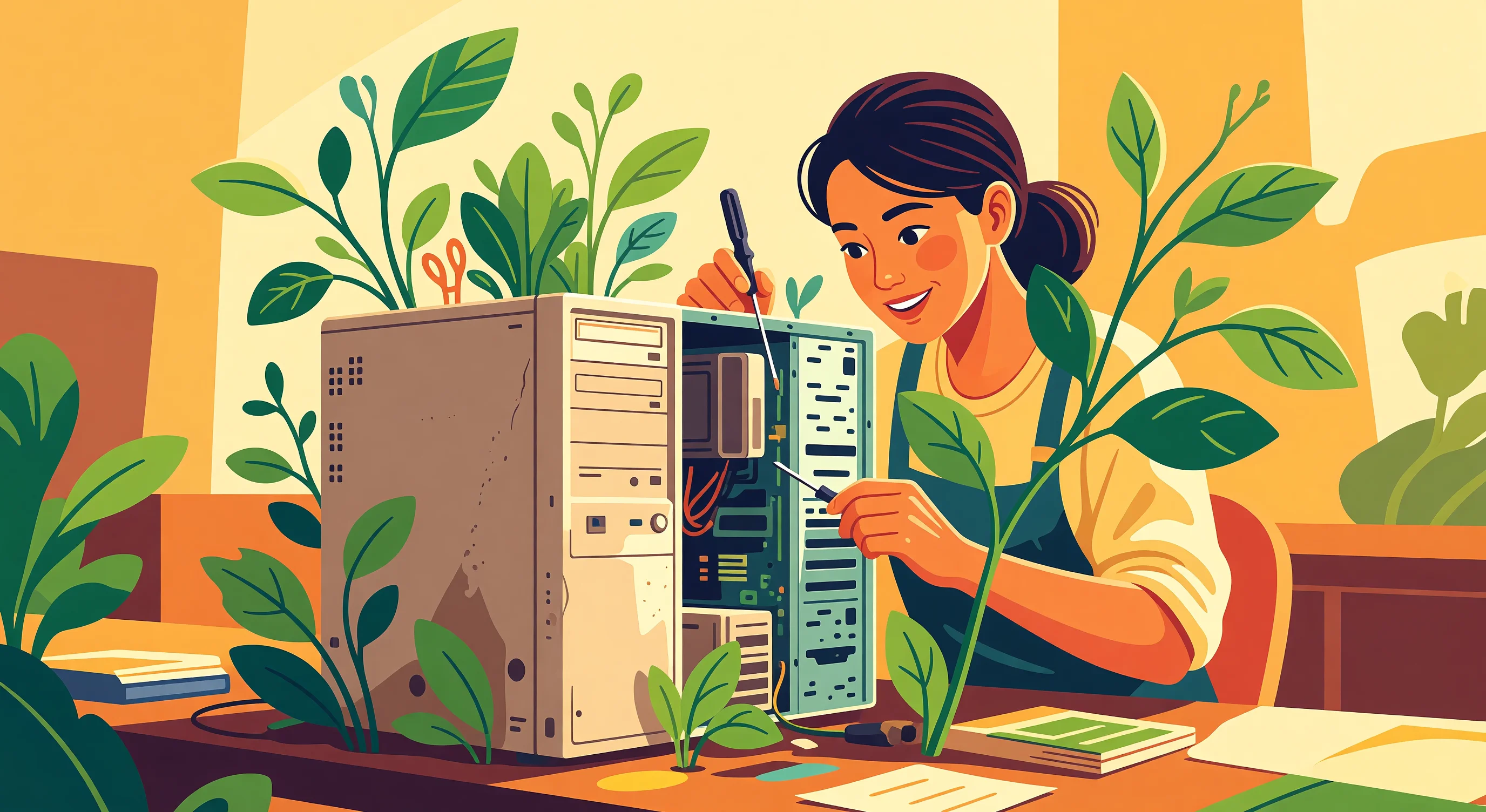
The first pillar relies on the Boréal-OS operating system. Designed specifically to be installed directly on a computer's hard drive, this sovereign native operating system bypasses the artificial hardware requirements imposed by software giants, such as the presence of a TPM 2.0 chip or a latest-generation processor. By replacing a heavy commercial system with an optimized and secure distribution, Boréal-OS instantly restores five to ten years of useful life to machines declared obsolete, while eliminating telemetry and non-consensual data collection.
The second pillar is the ProductivIA Platform. Rather than requiring excessive local resources to run artificial intelligence, ProductivIA runs entirely within the user's web browser. All the computing power needed to orchestrate conversational agents, semantic search, or document generation is offloaded to remote servers, notably through the sovereign Matania engine hosted in Quebec.
A Concrete Synergy for Organizations
For a public institution, a school, or a business mindful of its budget and compliance with Law 25, this synergy offers a concrete alternative to the forced replacement cycle. An aging computer fleet can be equipped with Boréal-OS to ensure the security and fluidity of the local workstation. Then, without any additional installation, users can access the ProductivIA Platform to perform their daily tasks.
Thanks to the integrated Nuage application, transparency is complete: users know exactly where their application data is stored, without any black boxes or opaque cross-border transfers. Files are managed in a centralized and secure manner, preventing the dispersion of personal information across local hard drives or foreign servers.
This approach demonstrates that it is possible to benefit from the latest advances in artificial intelligence without giving in to the pressure of buying new hardware. True sustainability does not lie in theoretical seven-year support promises, but in the ability to make software independent of manufacturers' physical requirements.
To Go Further
The question of hardware sustainability invites us to rethink our relationship with technology upgrade cycles. As right-to-repair legislative initiatives multiply across North America and Europe, choosing lightweight software infrastructures and decentralized execution environments is becoming an economic and ecological necessity. Organizations will have to choose between depending on manufacturer renewal cycles and adopting sovereign solutions capable of sustainably maximizing their existing hardware investments.