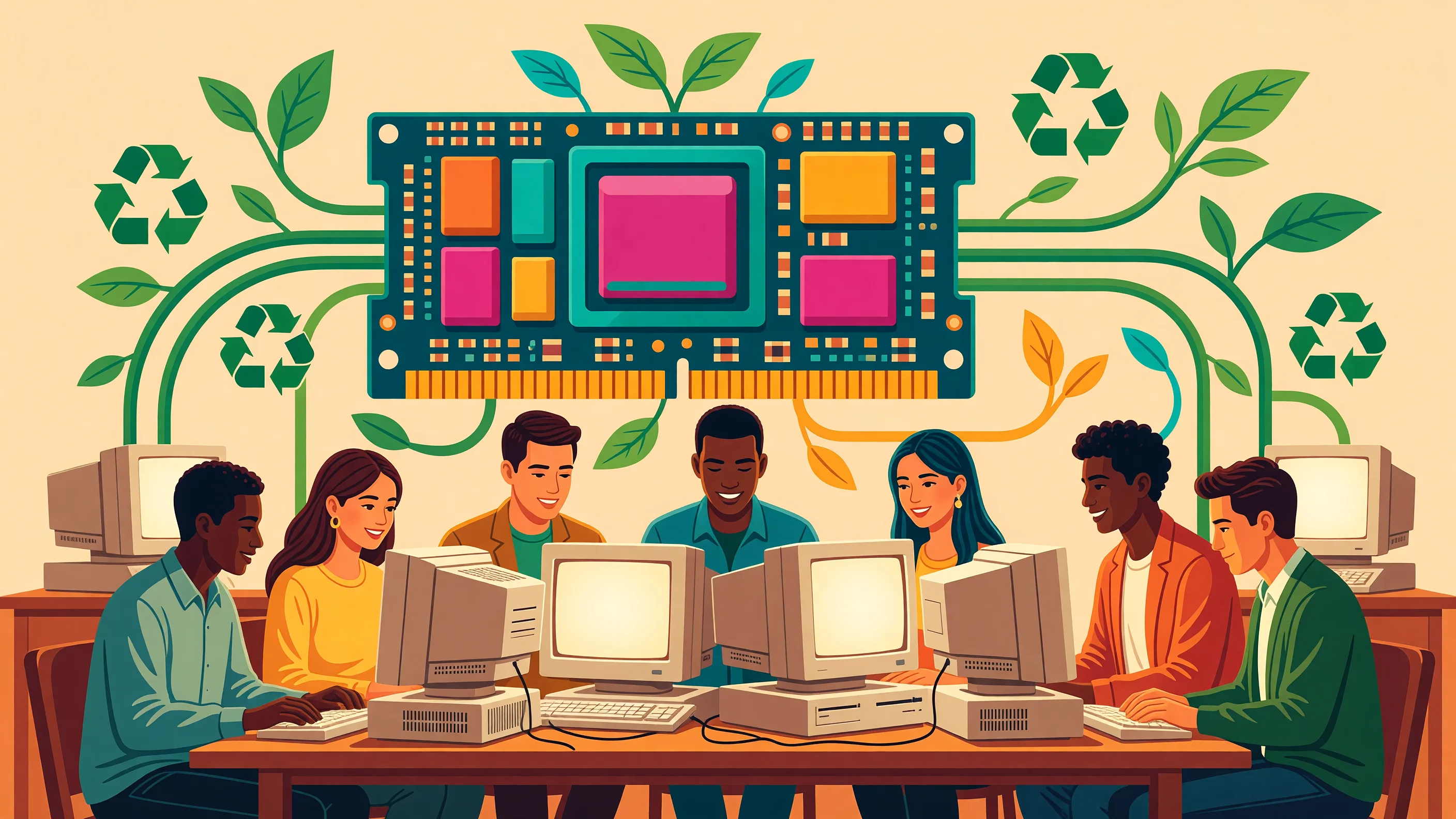
The Shockwave of "RAMageddon" on the Hardware Market
The tech industry is going through a period of major turbulence that is directly affecting the wallets of consumers and organizations. Recently, several electronics giants have introduced sudden and significant price hikes on their computer and tablet lineups. According to reports from Le Figaro and Le Monde, Apple adjusted its prices by several hundred dollars on its Mac computers and iPads. Microsoft followed suit by announcing a price increase for its Xbox consoles, attributing the decision to escalating component costs.
This situation, dubbed "RAMageddon" by some analysts, stems from a global shortage of memory and storage chips. In recent public statements, industry leaders have pointed out that the skyrocketing demand for artificial intelligence infrastructure is saturating semiconductor manufacturers' production lines. For institutional, educational, and corporate buyers, this reality poses a major challenge: how can they maintain digital productivity when the cost of acquiring new hardware is climbing out of control?
The Mechanics of an AI-Induced Systemic Shortage
To understand the origin of this crisis, we must analyze the structure of the semiconductor supply chain. The explosion of generative AI requires the construction of massive data centres equipped with high-performance graphics processors. These specialized chips require immense amounts of high-bandwidth memory (HBM) and latest-generation random-access memory (DDR5). According to a study published by the market research firm TrendForce, the absolute priority given by foundries to AI server memory has reduced the production capacity allocated to standard memory chips destined for personal computers and mobile devices.
This shift in global production is creating a structural imbalance. RAM prices have quadrupled and storage prices have doubled in a matter of months, according to data compiled by the specialized media outlet Numerama. Computer manufacturers, even those with the most optimized supply chains, can no longer absorb these cost increases and are choosing to pass them on to end users. This dynamic demonstrates that the physical infrastructure of AI carries a major indirect cost for all technology users, even those who do not actively use these new tools.
The Economic and Environmental Impact on Organizations
For school boards, municipalities, and businesses, this price hike coincides with another hardware pressure: planned obsolescence driven by software requirements. The announced end of support for Windows 10 and the strict compatibility criteria of Windows 11 (requiring TPM 2.0 security chips and recent processors) threaten to render millions of perfectly functional computers obsolete. Forcing the renewal of computer fleets in a climate of soaring prices represents a financial drain for taxpayers and shareholders alike.
On the environmental front, the toll is just as heavy. According to a report by the Association pour le développement de l'éducation relative à l'environnement, the manufacturing phase of a computer accounts for nearly 80% of its total carbon footprint over its entire lifecycle. Discarding a machine in good working order simply because its operating system is no longer supported, or because buying new memory has become cost-prohibitive, runs counter to the basic principles of digital sobriety and sustainable development.
The Sovereign Quebec Alternative: Decoupling Hardware from Software
Faced with this economic and ecological impasse, Quebec's sovereign ecosystem offers a disruptive approach: extending the useful life of existing hardware through an optimized software architecture. This strategy relies on the synergy between a lightweight native operating system and a cloud-based application environment.
At the first level, Boréal-OS is installed directly on the hard drive of computers declared obsolete by proprietary standards. This Quebec-made Linux distribution breathes new life into older machines by bypassing artificial hardware requirements. Freed from the heavy telemetry and background processes of commercial systems, the computer regains its original responsiveness without requiring investments in new RAM or processors.
At the second level, the ProductivIA application platform runs entirely within the web browser of the revitalized machine. Because it is designed around a no-code philosophy and clean web standards (standard PHP and JavaScript, without heavy frameworks), the platform requires very few local resources. Users can access a complete suite of productivity tools and AI assistants without their machines having to bear the burden of algorithmic processing.
Transparency is ensured by the Nuage application, which allows users to view and export all their data stored locally or within the organization's secure silo. For tasks requiring artificial intelligence, the platform orchestrates requests intelligently. Organizations subject to Law 25 on the protection of personal information can configure the orchestrator to route requests to the sovereign Matania engine, physically hosted in Quebec, thereby avoiding the transborder transit of sensitive data.
Moving Forward
The "RAMageddon" crisis highlights the vulnerability of organizations dependent on renewal cycles imposed by tech giants. By choosing to decouple hardware power from access to digital services, Quebec institutions and businesses can not only achieve substantial savings, but also commit to a concrete approach to technological sovereignty and environmental responsibility. True innovation no longer lies in accumulating raw power, but in the art of optimizing what already exists.