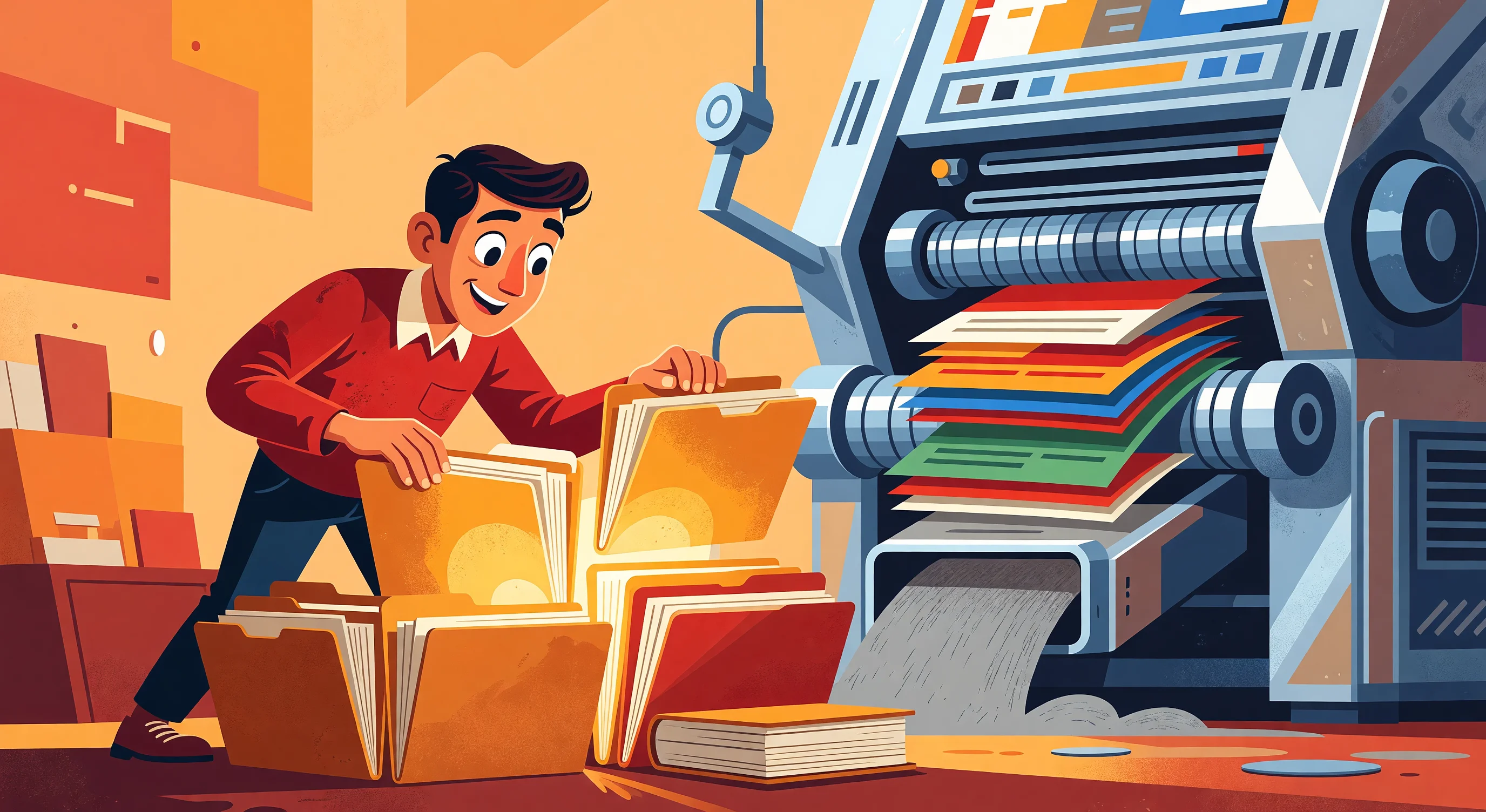
The Era of Anonymous Synthesis
The Web, as we have known it for three decades, relies on an implicit contract: creators produce original content, and search engines direct users to these sources through hyperlinks. This reciprocal model is now being deeply disrupted by the rise of search engines powered by generative artificial intelligence. Tools like Google AI Overviews, Perplexity, or SearchGPT no longer just guide users; they read, condense, and display a single answer directly on their interface, saving users from having to visit the original site.
This transition from a referral Web to an answer Web is raising serious concerns within the scientific community. According to an analysis published by Futura Sciences, American researchers are warning of the risk of a gradual dehumanization of the network. By eliminating the path to the original source, these systems not only deprive creators of their audience and revenue, but they also tend to smooth out human thought under a veneer of standardized statistical neutrality.
The Mechanism of Cognitive Standardization
To understand this phenomenon, it is necessary to analyze the technical inner workings of these engines. When a query is made, the algorithm extracts fragments of information from thousands of web pages, then uses a large language model (LLM) to write a summary. This process relies on vector representations, called embeddings, which measure the semantic proximity of concepts. While powerful, this retrieval-augmented generation (RAG) method applied at the scale of the Internet poses a major problem: it merges divergent opinions, local nuances, and varied writing styles into a single text, often stripped of historical or cultural context.
According to a report by the Reuters Institute for the Study of Journalism, this centralization of answers risks creating a true information monoculture. Users, accustomed to getting immediate, pre-digested answers, lose the habit of comparing different viewpoints. Furthermore, language models trained on massive text datasets tend to reproduce majority biases and eliminate minority or specialized voices. The Web thus becomes colder, more homogeneous, and, ultimately, less representative of human intellectual diversity.
Restoring the Original Source with ProductivIA
Faced with this trend toward global anonymization, alternative architectures can restore information sovereignty and respect for human work. The ProductivIA platform offers a different approach to knowledge management, particularly through its Document Library application. Unlike public search engines that absorb and dilute data, the Document Library uses RAG technology within a strictly defined and transparent framework.
When an organization or institution uses the Document Library, the system does not invent anything or merge identities. Internal documents (reports, policies, analyses) are indexed as embeddings to enable precise semantic search. However, every answer generated by the Assistant is strictly based on direct citations and provides explicit references to the original files, which can be viewed in the Cloud application. Users thus retain the ability to verify who wrote the document, in what context, and to access the author's complete line of thought.
In addition, ProductivIA's News application restores a plurality of voices by relying on direct RSS feeds from local, national, and international media. Rather than letting an AI rewrite the news in a standardized format, the application presents original articles in all their editorial diversity. This combination allows professionals in education, business, and institutions to benefit from the power of AI to sort and analyze information, without ever losing the vital link to the human intelligence that produced it.
Toward a Local Information Ecology
Preserving a diverse Web does not depend solely on individual choices, but on adopting tools that respect intellectual property and data traceability. By prioritizing no-code software architectures that value local knowledge bases over centralized global summaries, organizations regain control of their collective memory. The question is no longer whether AI should search on our behalf, but how we can use it to highlight human sources rather than obscure them.