The Invisible Inflation of RAM
The mobile phone and personal computer industries are undergoing a quiet but highly costly transformation for consumers and organizations. As tech giants compete to integrate artificial intelligence features directly into our devices, an economic reality is setting in: this transition requires a massive upgrade in hardware components, particularly random access memory (RAM).
According to an analysis published by the specialized media outlet Les Numériques, upcoming smartphone models, such as Samsung's Galaxy S26 lineup, are poised for a notable price hike. The culprit is a shortage and rising cost of RAM, which is essential for running language models locally without relying systematically on the cloud. This trend is not limited to phones. Personal computers are facing the same pressure, with manufacturers raising minimum configurations to meet the certification requirements for AI-compatible devices.
Why Does Local Artificial Intelligence Require So Many Resources?
To understand this inflation, one must look at how language models operate. Unlike traditional applications that execute simple sequential instructions, an AI model must load all of its parameters (its neural connections) directly into the device's RAM to respond smoothly. Even when using compression techniques like quantization, which reduces the mathematical precision of parameters to make them lighter, a medium-sized model requires several gigabytes of RAM dedicated exclusively to its execution.
According to forecasts from the analyst firm Gartner, the rapid adoption of PCs and smartphones equipped with local generative AI will drive up the average selling price of devices worldwide. For businesses and public institutions, this hardware requirement presents a complex dilemma: accept an accelerated and costly refresh of their IT fleets, or miss out on the productivity gains promised by these new tools.
This hardware arms race also poses a major environmental problem. The Global E-waste Monitor report highlights that electronic waste production is growing at an alarming rate, fueled by rapid technological obsolescence. Manufacturing a new device accounts for nearly 80 percent of its total carbon footprint over its entire lifecycle. Forcing the replacement of perfectly functional machines solely to meet the memory requirements of local AI directly contradicts digital sustainability goals.
The Alternative of Offloaded Architecture: The Lightweight Browser
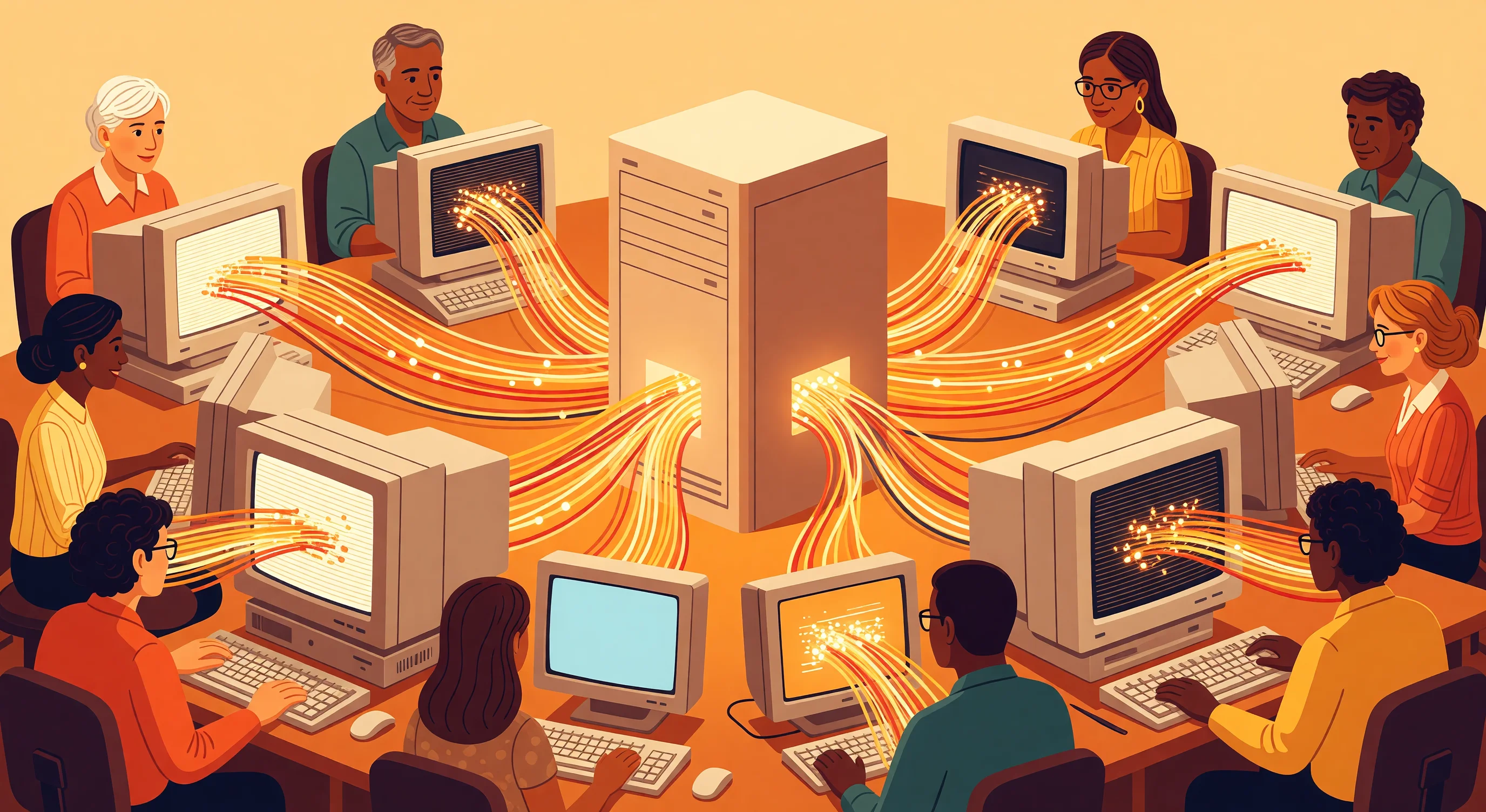
Faced with this financial and environmental pressure, an alternative approach consists of separating the user interface from the computing power. This is precisely the design philosophy behind the ProductivIA platform. Rather than requiring every phone, tablet, or laptop to have high-end components to run AI models, the platform offloads the computational workload to centralized, sovereign infrastructures.
When a user interacts with the ProductivIA Assistant application, the request is not processed by the local processor of their machine. It is routed to the organization's silo server or to the sovereign model provider Matania, hosted locally in Quebec. The user's device, whether it is a desktop computer dating back several years or a standard mobile terminal, acts only as a display window through its web browser.
This architecture offers several concrete advantages:
- Extended hardware lifespan: Since a computer only needs a modern web browser to run the entire application suite, the obligation to refresh the IT fleet disappears.
- Transparency and control: Thanks to the Nuage application, users maintain full visibility over where their data and documents are stored, without them being scattered across the local memory of mobile devices that are easily lost or hacked.
- Eco-responsibility: By centralizing computation on optimized servers, overall energy consumption is controlled, avoiding the waste associated with local graphics chips that sit idle most of the time.
This software approach aligns seamlessly with native operating system solutions like Boréal-OS. By installing a lightweight, sovereign distribution on machines declared obsolete by commercial systems, organizations can give their hardware a second life while accessing the power of AI through the browser.
Toward Mindful Digital Sobriety
The need to integrate artificial intelligence into workflows must not come at the expense of financial and environmental responsibility. Hardware price inflation, driven by the demands of local AI, demonstrates the limits of a model where every user must own a pocket supercomputer.
By prioritizing standardized web architectures, free of heavy software dependencies and based on offloaded computation, it becomes possible to reconcile technological innovation with rigorous resource management. The question is no longer whether our devices are powerful enough for AI, but how we can organize our infrastructure so that AI remains accessible to everyone, on any screen.