The Rise of the "King of the North" at Downing Street
The British political landscape is undergoing a major transition. On July 20, Andy Burnham officially became the Prime Minister of the United Kingdom, succeeding Keir Starmer, as reported by the international press, including the BBC and Le Figaro. Nicknamed the "King of the North" due to his long tenure as mayor of Greater Manchester, Mr. Burnham takes office with a strong promise: to break away from London's hyper-centralization and return power to the regions.
In his first speech outside 10 Downing Street, the new head of government called for a "new political and economic model" capable of restoring stability to a country marked by severe ministerial instability. At the heart of his doctrine lies decentralization, or devolution, a process aimed at transferring decision-making and budgetary powers from the central state to local authorities. This approach, proven in Manchester, is based on the idea that decisions are more effective and better accepted when made closer to citizens.
Decentralization as a Remedy for Central Inefficiency
To understand the significance of this appointment, one must analyze the limitations of the traditional centralized model. According to an analysis published by the think tank Institute for Government, the excessive concentration of power in Westminster has often led to a disconnect between national policies and the socio-economic realities of different British regions. Centralization creates administrative bottlenecks, slows down decision-making, and standardizes solutions that actually require nuance and local adaptation.
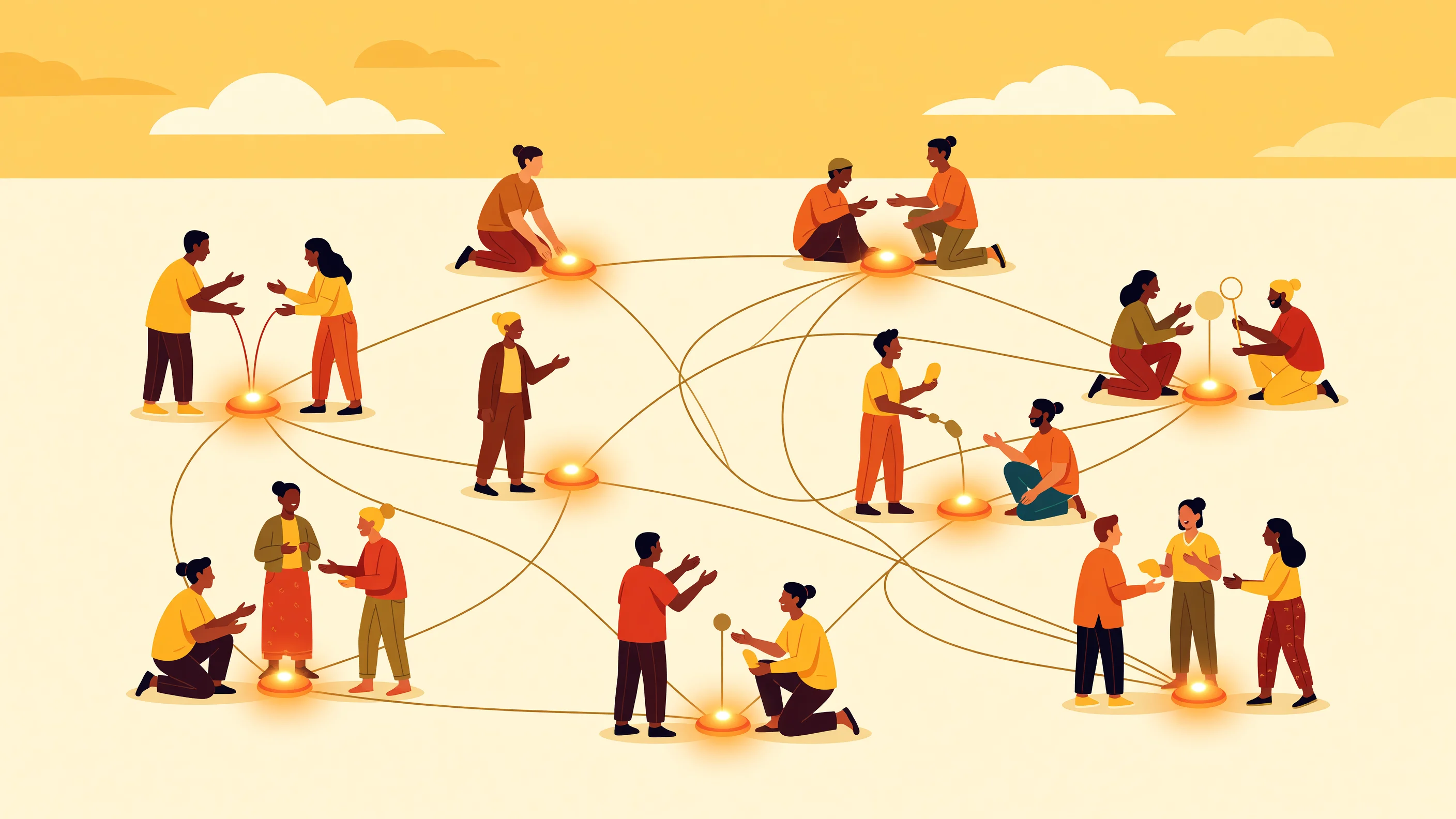
Mr. Burnham's doctrine, sometimes described as "Manchesterism" by political analysts, offers an alternative: a network of autonomous yet coordinated local governments. By directly managing transportation, housing, and employment integration at the regional level, local authorities have demonstrated their ability to innovate faster than central departments. This model does not seek to fragment the state, but rather to make it more resilient by distributing responsibilities.
From Political Federalism to Digital Sovereignty
This debate over the distribution of power goes far beyond public institutions and finds a striking parallel in the evolution of information technology. For the past two decades, the IT world has followed the opposite path, characterized by extreme centralization. Today, the vast majority of corporate and institutional data is hosted by a handful of American tech giants, often referred to as hyperscalers.
This centralization poses major operational and security risks. As ProductivIA has previously documented, relying on a single provider for all cloud infrastructure and artificial intelligence tools creates a single point of failure. In the event of an outage, a cyberattack, or a unilateral change in terms of service, entire organizations can find themselves paralyzed. Furthermore, for institutions subject to strict regulations such as Quebec's Law 25, the cross-border transit of data to centralized servers in the United States exposes personal information to extraterritorial laws like the CLOUD Act, creating a permanent risk of non-compliance.
Multi-Silo Architecture and the Nuage Application: Autonomy by Design
It is precisely in response to this centralization issue that the ProductivIA platform was designed. Rather than imposing a monolithic environment where all user data is merged and processed in the same place, the platform relies on a rigorous multi-silo architecture. Each organization has its own secure, isolated logical space, called a "silo," ensuring that data is never shared or exposed to third parties without explicit consent.
The Nuage application embodies this philosophy of transparency and local control. Unlike traditional cloud solutions that operate as black boxes, Nuage allows administrators and users to see exactly where their files are stored, control access flows, and export all of their data in standard formats at any time. This native portability eliminates vendor lock-in and restores full ownership of informational assets to organizations.
This decentralization also extends to the orchestration of artificial intelligence. Thanks to the Assistant application, the platform's application services communicate with each other in a modular fashion via standardized protocols (assistant_services). A silo administrator can configure the Assistant to query local document databases or use the sovereign Quebec model, Matania, for sensitive tasks, thereby avoiding any data transit abroad. This approach directly opposes the unmanaged "vibe coding" model by offering a secure, no-code environment where every generated application is audited and sandboxed before deployment.
Going Further
The transition toward decentralized models, whether political or technological, raises fundamental questions about the governance of tomorrow. How can we reconcile the autonomy of local entities with the need for global coordination? As the United Kingdom begins its experiment with decentralization under Andy Burnham's leadership, Quebec organizations already have the architectural tools to apply these principles to their digital infrastructure, ensuring their resilience and compliance in the face of contemporary challenges.