A Global Rupture in the Technological Order
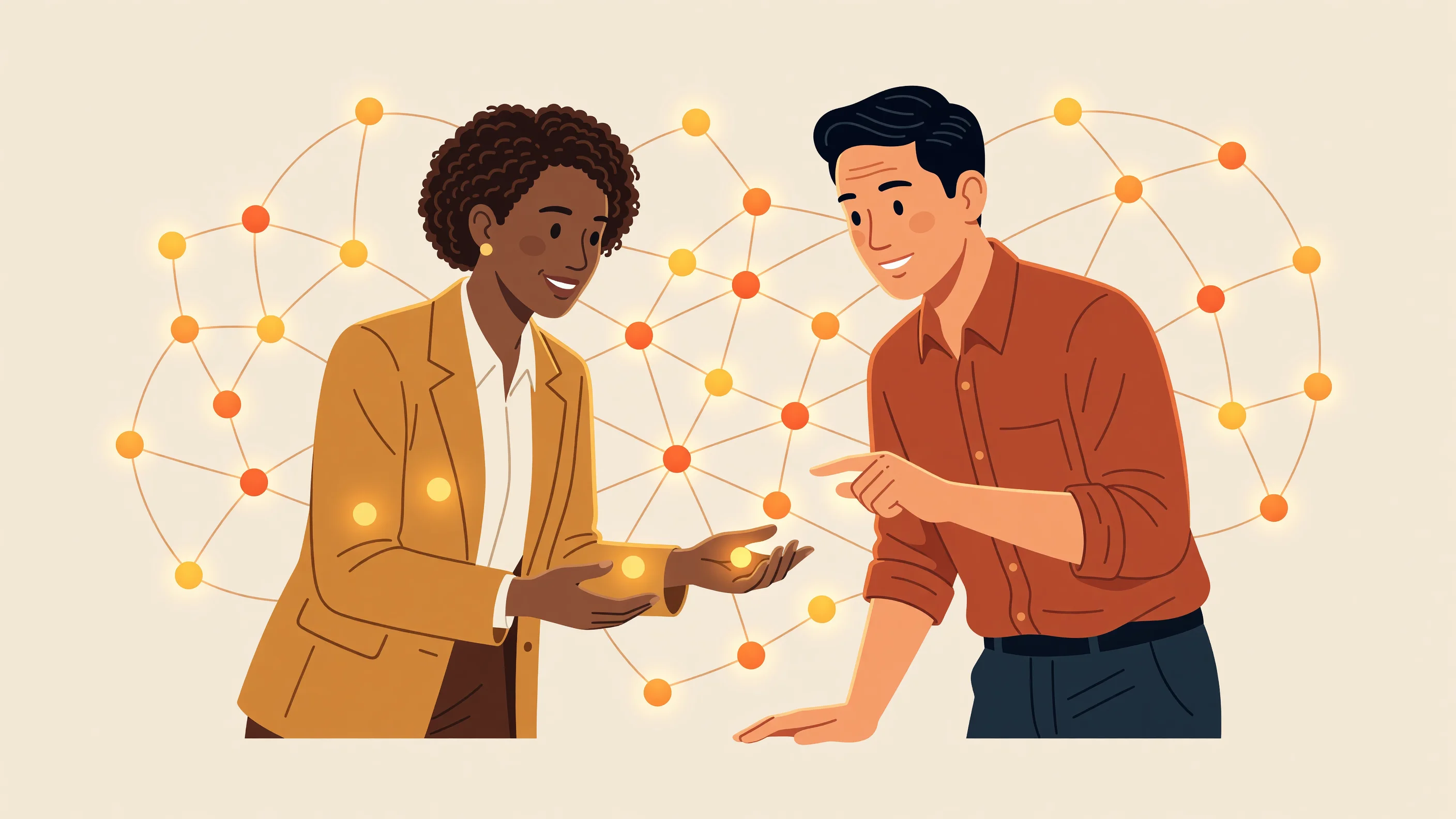
During his recent official visit to Dublin, the Prime Minister of Canada, Mark Carney, issued a solemn warning regarding the state of the world order. Pointing to a "global rupture," he called on middle powers, notably Canada and European Union members, to unite in carving out a technological "third path." This statement, widely covered by international media such as Al Jazeera and RTÉ, comes as trade tensions and the concentration of artificial intelligence infrastructure in the hands of a few American and Chinese giants reach new heights.
At the same time, an analysis published by the daily newspaper The Globe and Mail reveals a singular phenomenon: while the United States is experiencing an investment frenzy in massive data centres, Canada is seeing a certain slowdown in this area. Far from being a simple economic lag, this gap highlights the physical, energy, and financial limits of the centralized model promoted by Silicon Valley. For local governments and businesses, the question is no longer how to compete with the computing budgets of multinationals, but how to design autonomous, energy-efficient, and secure computing.
The Mirage of the Gigawatt Race
The dominant model of artificial intelligence currently relies on extreme centralization. To train and run ever-larger language models, market leaders are building infrastructure with power consumption that rivals that of small nations. According to projections by the International Energy Agency (IEA), electricity demand from data centres and AI could double by the end of the decade, posing major challenges for the energy transition.
For middle powers and local organizations, attempting to replicate this model is a dead end. The required investment runs into tens of billions of dollars, while dependence on foreign chip and server suppliers deepens. Furthermore, this centralization exposes the sensitive data of citizens and businesses to extraterritorial laws, such as the US CLOUD Act or Section 702 of the FISA, creating a direct conflict with personal information protection requirements, notably Quebec's Law 25.
The search for a third path therefore requires a paradigm shift: moving from a logic of centralized gigantism to a distributed, frugal, and localized approach. It is from this perspective that local execution technologies and intermediate-sized models, often called small language models or SLMs, make perfect sense.
Local Execution and Sovereignty Through the Browser
True technological autonomy does not require building supercomputers in every territory. It can rely on a resource already present in all organizations: the computing power of desktop computers. Thanks to the emergence of modern web standards like the WebGPU API, browsers can now directly access the graphics processing unit (GPU) of the user's machine to run complex artificial intelligence models.
This approach, often referred to as Edge AI, offers fundamental advantages:
- Absolute confidentiality: Processed text or document data never leaves the computer's RAM. The risk of leaks or network interception is eliminated at the source.
- Energy efficiency: By leveraging local power for daily tasks, constant back-and-forth communication with remote servers is avoided, thereby reducing the overall carbon footprint of processing.
- Operational independence: Tools remain functional even in the event of a network outage or cloud provider service disruption.
For tasks requiring greater computing power or organization-wide knowledge sharing, the alternative is to use models hosted locally on sovereign infrastructure, ensuring that data flows remain confined within national or provincial borders.
Perspective Within the ProductivIA Ecosystem
The ProductivIA platform concretely embodies this technological third path by offering a decentralized architecture that respects data sovereignty. Rather than forcing systematic connection to the servers of web giants, it allows organizations to scale their use of artificial intelligence according to their security and compliance requirements.
At the heart of this strategy, the Local AI application uses the standard WebGPU API to run language models directly in the user's browser. Whether writing a report, summarizing a document, or sorting information, processing is done locally. This method ensures natural compliance with Law 25, as no personal information is transmitted to a third party.
When an organization's needs require more complex orchestration or access to shared knowledge bases, the ProductivIA platform relies on Matania, the sovereign model provider physically hosted in Quebec. Seamlessly integrated into the orchestration layer, Matania processes the most demanding requests without ever transmitting data outside Quebec territory. Silo administrators can thus configure the platform to route sensitive flows to this sovereign engine, while retaining the ability to use other models for public, non-confidential tasks.
This software approach also integrates harmoniously with the native operating system, Boréal-OS. By giving a second life to existing computer equipment, Boréal-OS allows institutions and businesses to deploy the ProductivIA suite on machines considered obsolete by commercial standards, thereby combining software sovereignty, data security, and environmental responsibility.
Looking Ahead
The call for a technological third path by political leaders highlights the urgency of developing viable alternatives to AI monopolies. As bilateral agreements multiply, such as the recent partnership between Canada and Ireland on artificial intelligence, the viability of these alliances will depend on our ability to deploy open, interoperable software architectures that are independent of hyperscaler infrastructure.