The Rise of Autonomous Software Engineering
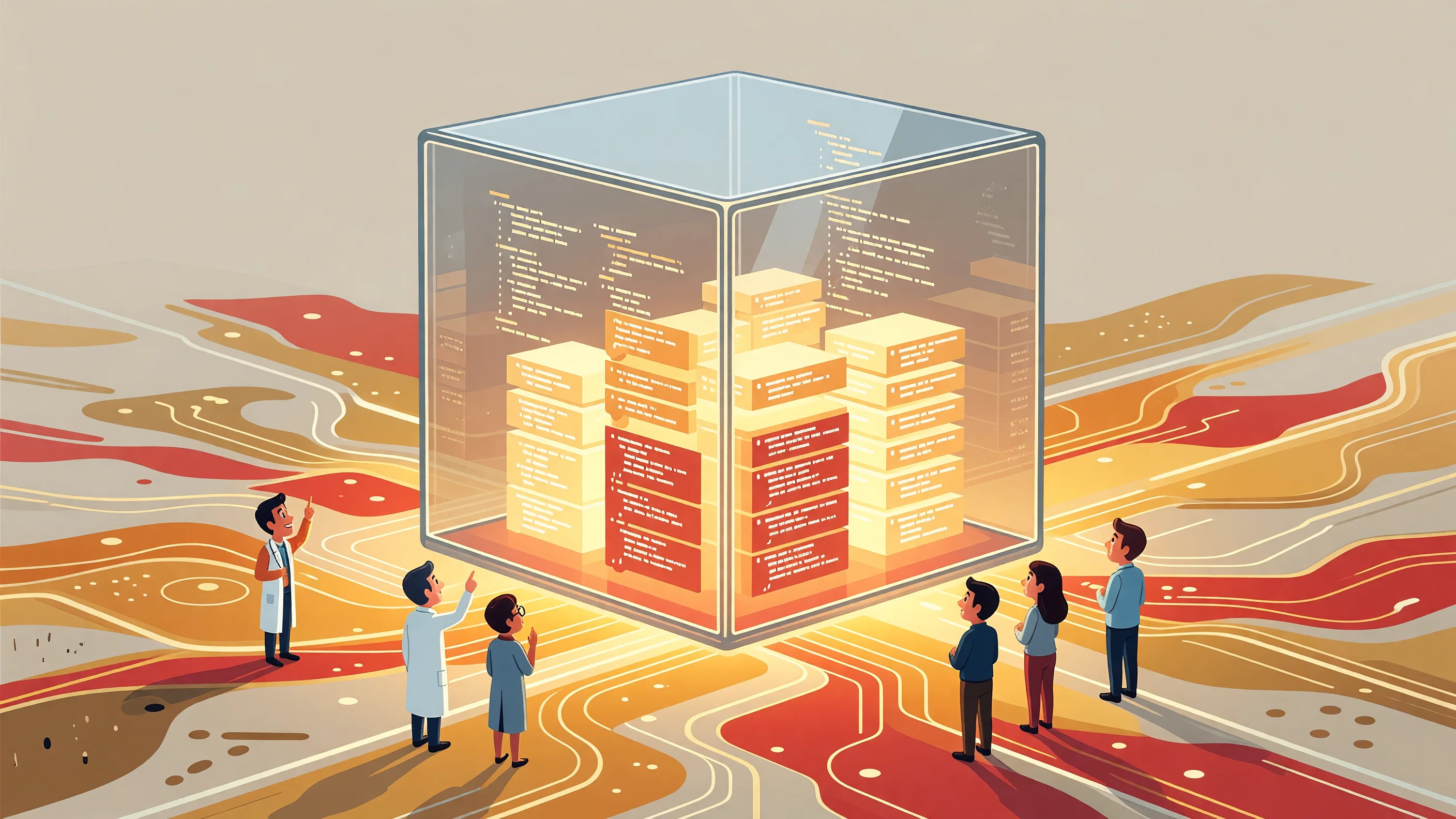
A quiet transformation is taking place behind the scenes of the technology industry. The era when artificial intelligence was limited to suggesting isolated lines of code, like an advanced spell checker, is rapidly fading. We are entering the era of autonomous engineering agents. Recent systems, such as the Google Antigravity project, illustrate this shift: these agents no longer just answer programming questions, they plan, write, test, and deploy entire software architectures with minimal human intervention.
Often called "vibe coding," this technological transition is appealing because of its promise of multiplied productivity. It allows professionals to design custom tools simply by interacting in natural language. However, behind this apparent simplicity lie complex security challenges that are increasingly documented by international cybersecurity bodies. The uncontrolled deployment of automatically generated code by agents without structural oversight is beginning to raise serious concerns within corporate and institutional IT departments.
The Pitfalls of "Vibe Coding" and Security Vulnerabilities
The main danger of this autonomy lies in the lack of critical distance and systematic auditing of the produced code. When an AI agent writes and integrates programs directly into a production environment, the risk of injecting vulnerabilities increases exponentially. According to joint guidelines published by the U.S. Cybersecurity and Infrastructure Security Agency (CISA) and its international partners, software development security requires rigorous validation at every step, a principle that the immediacy of AI tends to bypass.
The most common vulnerabilities are not just syntactic errors. They involve the accidental introduction of major flaws listed in the OWASP (Open Web Application Security Project) Top 10, such as insecure input handling or the accidental exposure of API keys. Furthermore, a study led by Stanford University revealed that developers using AI-based coding assistants tend to produce code with more security flaws while expressing overconfidence in the reliability of their output.
The UK's National Cyber Security Centre (NCSC) has also issued clear warnings regarding the unregulated use of these development agents within corporate networks. Without strict isolation, these autonomous agents can become vectors for indirect prompt injection attacks, allowing a malicious actor to execute arbitrary code on an organization's servers simply by manipulating the data read by the AI.
The ProductivIA Approach: Guarded No-Code as a Shield
Faced with these risks, the solution is not to ban automation, but to govern it rigorously. This is precisely the angle championed by Quebec-based platform ProductivIA with its flagship application, Fabrique. Unlike the "vibe coding" model, where AI generates code that is directly exposed to the global infrastructure or the user's computer, Fabrique implements a strictly controlled no-code model.
In this environment, when an organization needs to design a specific business application, the platform handles the tool's generation but immediately confines the resulting code within a fully isolated sandbox. Before publication, the generated application undergoes a rigorous automated audit designed to detect security vulnerabilities and unnecessary dependencies. The end user never interacts directly with raw code, thereby limiting the attack surface and eliminating the technical debt associated with maintaining third-party software libraries.
Furthermore, the centralized orchestration provided by the ProductivIA Assistant ensures that each application complies with the platform's security protocols. Through the use of standardized interfaces called assistant_services, applications communicate with each other in a compartmentalized manner. This makes it impossible for a compromised application to infect the rest of the organization's information system. This multi-silo architecture protects data integrity while offering the flexibility to design internal tools in French, autonomously and securely.
A Necessary Transition Toward Sovereign Architectures
The enthusiasm for AI coding will not wane, but the maturity of organizations will be measured by their ability to reject unmanaged integrations. Adopting sovereign tools makes it possible to reconcile the speed of automation with data control. By combining a streamlined, telemetry-free operating system like Boréal-OS at the workstation level, the browser-based ProductivIA application platform, and the Quebec-made AI engine Matania for processing sensitive data, institutions and businesses have a comprehensive suite to neutralize today's cyber risks.
Security by design is no longer a theoretical option, but an operational necessity. As foreign autonomous agents multiply, prioritizing local infrastructure and guarded generation methods remains the best strategy for preserving the autonomy and resilience of our digital ecosystem.