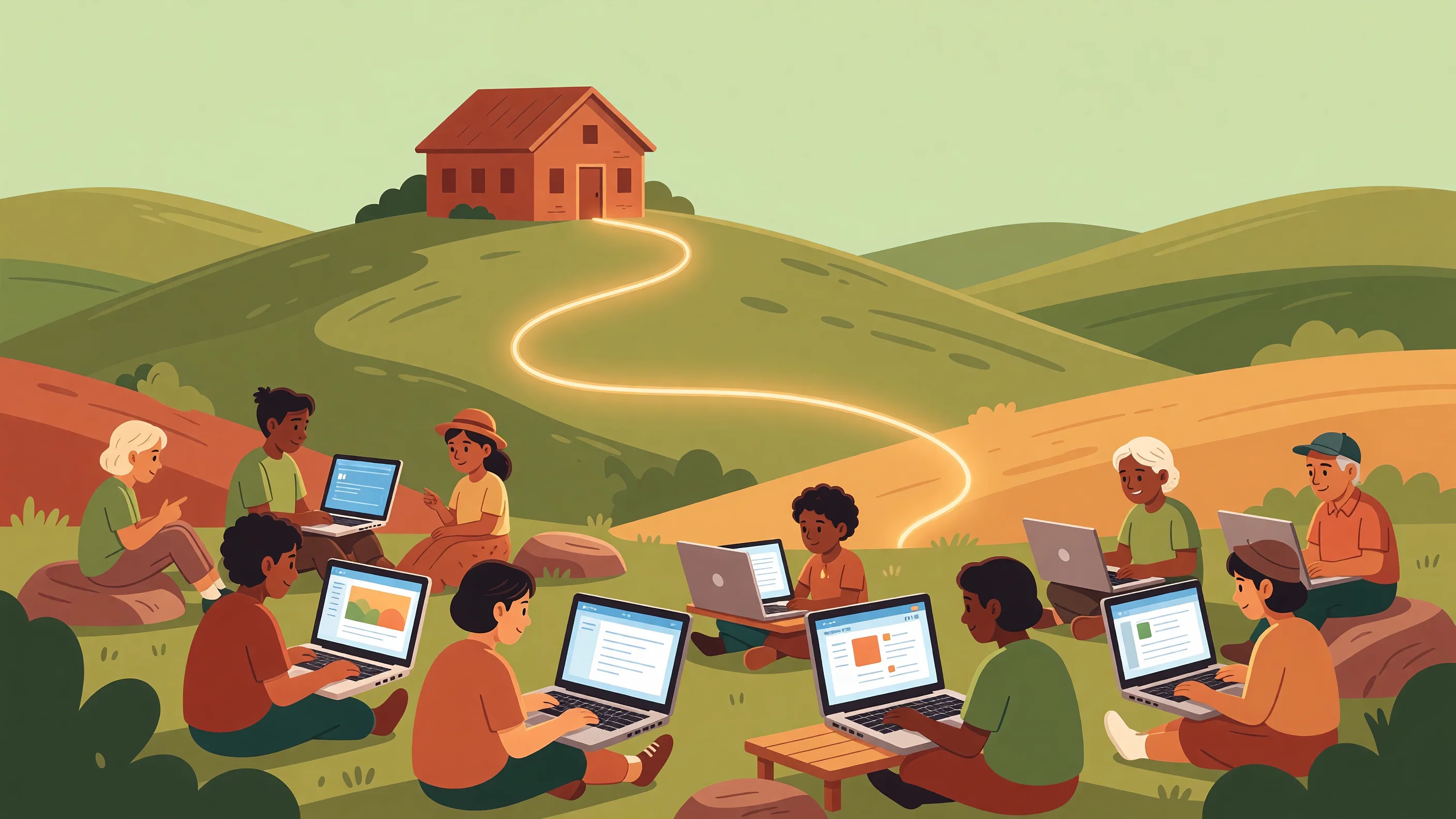
The Illusion of Connectivity Without Sustainable Hardware
Canada's Secretary of State for Rural Development, Buckley Belanger, announced an investment of over $141 million to expand high-speed internet access in several Saskatchewan communities. This initiative is part of a national political commitment to bridge the digital divide that still isolates many rural and remote regions.
Bringing fibre optics to the doorsteps of homes, schools, and small local businesses is a necessary but insufficient step. An ultra-fast connection loses its purpose if users do not have computers capable of leveraging it. Yet, the global IT fleet, particularly in rural and school environments, faces a crisis of planned obsolescence on an unprecedented scale.
The Wall of Forced Software Obsolescence
The announced end of support for older operating systems, combined with strict hardware requirements for new versions (such as the mandatory presence of a TPM 2.0 security chip or Secure Boot protocol), threatens to turn millions of perfectly functional computers into electronic waste. According to a study by analysis firm Canalys, nearly 240 million personal computers risk being discarded globally for simple reasons of software compatibility.
For rural schools, municipalities, and low-income families, the financial burden of replacing these computer fleets cancels out the economic benefits of high-speed internet. According to the Global E-waste Monitor published by the United Nations, electronic waste production is growing five times faster than documented recycling. In light of this, the traditional approach of systematically replacing hardware is becoming unsustainable, both economically and ecologically.
The Quebec Alternative: Boréal-OS to Revitalize Hardware
It is precisely at this intersection of physical connectivity and hardware viability that Quebec's sovereign ecosystem positions itself. Boréal-OS, a native operating system designed in Quebec, offers a direct response to this technological waste. By installing directly onto the hard drives of machines declared obsolete by major software publishers, this lightweight and secure Linux distribution adds five to ten years of useful life to existing hardware.
Boréal-OS bypasses the requirements for proprietary security chips or latest-generation processors. A rural elementary school or a municipal library can thus keep all of its classroom computers while benefiting from a modern, smooth system free of commercial telemetry. Extending a computer's lifespan by five years is, according to ADEME reports on the environmental impact of digital technology, the most effective lever for reducing the carbon footprint associated with manufacturing devices.
ProductivIA: A Sovereign Application Environment in the Browser
Once the machine is revitalized by Boréal-OS, access to modern work tools is achieved directly in the browser through the ProductivIA platform. This no-code application environment requires no heavy local installation or complex software dependency maintenance. Users can access a complete suite of productivity and artificial intelligence applications without local computing power becoming a bottleneck.
This architecture offers a double advantage for regional communities:
- Hardware frugality: Applications run smoothly, even on older processors, because the standardized interface in PHP and pure JavaScript minimizes the load on RAM.
- Sovereignty and compliance: For public institutions and schools subject to strict personal information protection rules (such as Law 25 in Quebec), this technology stack ensures that data does not transit through foreign infrastructure. The integration of sovereign artificial intelligence models, such as those from Quebec provider Matania, allows sensitive data processing to be performed locally or on servers hosted in Quebec.
Going Further
Digital equity is not just about deploying fibre optic cables. It requires a comprehensive approach to hardware sustainability and application sovereignty. Public policies for rural connectivity would benefit from integrating software-based reclamation programs for existing hardware. How can governments encourage the adoption of open operating systems to prevent electronic waste while guaranteeing the security of citizens' data?