The Dark Web's Shadow Over North American Driver's Licences
A shockwave is rippling through the North American information security sector. According to reports by the business media outlet Mint, a federal investigation is underway regarding the sale on the Dark Web of a database containing approximately 153 million American and Canadian driver's licence records. While the exact origin of the leak has yet to be confirmed by authorities, the scale of the incident highlights the inherent fragility of highly centralized storage infrastructures. The compromised information, which includes critical identity data, potentially exposes millions of citizens to long-term identity theft risks.
This type of event is no longer a statistical anomaly; it is a predictable consequence of a digital architecture focused on the massive concentration of data. In an editorial published by the Jerusalem Post, several analysts point out that cyber infiltration and massive data leaks now constitute a systemic vulnerability for Western democracies, weakening public trust in the institutions responsible for protecting personal information. Faced with this reality, the fundamental question is no longer just how to better encrypt massive databases, but whether the very model of extreme centralization must be abandoned in favour of a distributed approach.
The Systemic Trap of the Mega-Database
To understand why incidents of this scale are multiplying, we must analyze the concept of an attack surface. In cybersecurity, this term refers to all the vulnerable entry points that a computer system exposes to potential attackers. When an organization or a state aggregates millions of sensitive records within a single data warehouse or a giant public cloud, it creates what engineers call a honeypot. The financial and strategic appeal of this database becomes so high that it justifies major investments of time and resources by highly skilled cybercriminal groups to breach it.
Centralization also creates a single point of failure risk. A single configuration error, a compromised administrator password, or a zero-day vulnerability (a software vulnerability that has not yet been patched) is enough to expose the entire stored informational asset. Traditional protection methods, while necessary, show their operational limits. Encrypting data at rest does not protect against an attacker who successfully hijacks legitimate access privileges. This is why scientific research is increasingly turning towards paradigms of logical and physical compartmentalization, where the compromise of a single access point does not lead to the collapse of the entire structure.
Compartmentalization by Silo: The Least Privilege Alternative
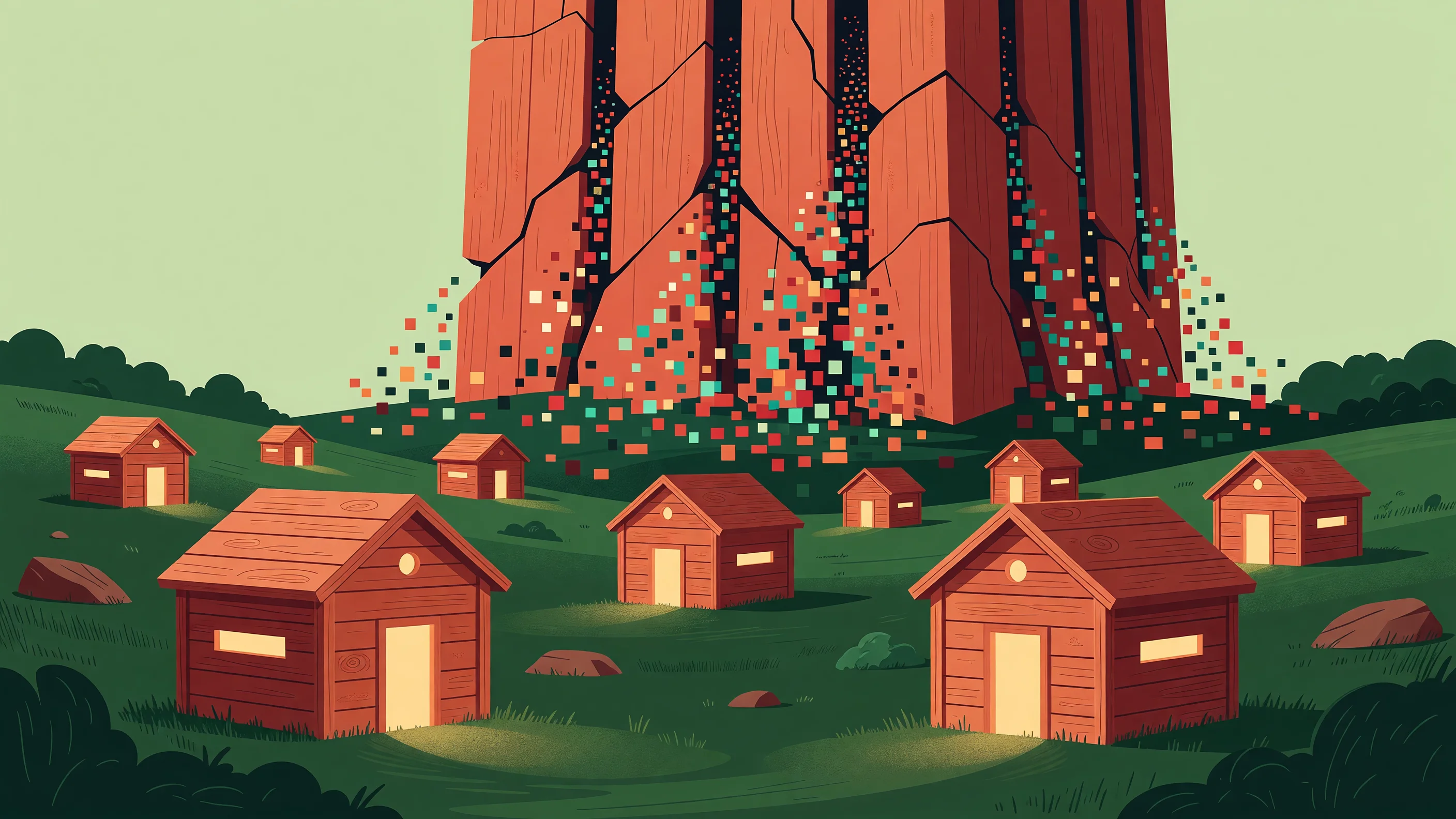
The architecture of the ProductivIA platform is based precisely on this principle of drastically reducing the attack surface. Rather than consolidating all records within a universal, shared database, the platform applies a strict multi-silo philosophy. A silo represents a completely sealed logical space, unique to each organization, school, or institution. End-user data is never mixed with that of other entities. It resides within its own space, the structure and access of which are managed in a transparent and verifiable manner.
The Nuage application, integrated into the platform, is a concrete illustration of this principle of transparency and local control. It allows users to view the exact location of their files stored within their silo's data directory. Unlike consumer services from tech giants, where data travels to opaque global servers, the Nuage application guarantees total portability and immediate compliance control, particularly regarding the strict requirements of Quebec's Law 25 on personal information protection. If a security incident were to occur within a specific silo, the impact would remain strictly confined to that entity, preventing a mass leak similar to the driver's licence leak on the Dark Web.
To ensure complete infrastructure protection, this software sealing must be supported by an equally rigorous machine environment. This is where the sovereign operating system Boréal-OS comes in. By installing this Quebec-made Linux distribution directly on the hard drives of the organization's computers, administrators eliminate automatic telemetry, which is the invisible transfer of usage and configuration data to third-party servers often located abroad. Boréal-OS replaces proprietary commercial systems with a verifiable and streamlined framework. Once this machine foundation is secured, access to the ProductivIA application suite is done simply through the browser, combining the resilience of the physical workstation with the logical security of application silos.
Towards Architectural Sobriety for Public Institutions
Managing citizens' digital identity requires a transition towards technologies that respect territorial sovereignty. Analyses published following recent trade tensions between Canada and the United States highlight the vulnerability of an exclusive dependence on infrastructure located outside our legal borders. Subjecting the retention of official documents, such as driver's licences or student records, to hosting providers governed by extraterritorial laws like the US Cloud Act carries significant geopolitical and legal risks.
By choosing a local technology stack, which combines Boréal-OS for the physical machine, ProductivIA for the work environment, and Matania for sovereign artificial intelligence processing, public institutions and local businesses are choosing resilience. This approach is not about turning inward, but represents sound management of digital risks. In the face of increasingly sophisticated cyberthreats, simplicity and local isolation prove to be far more robust defences than the complexity of large integrated systems.