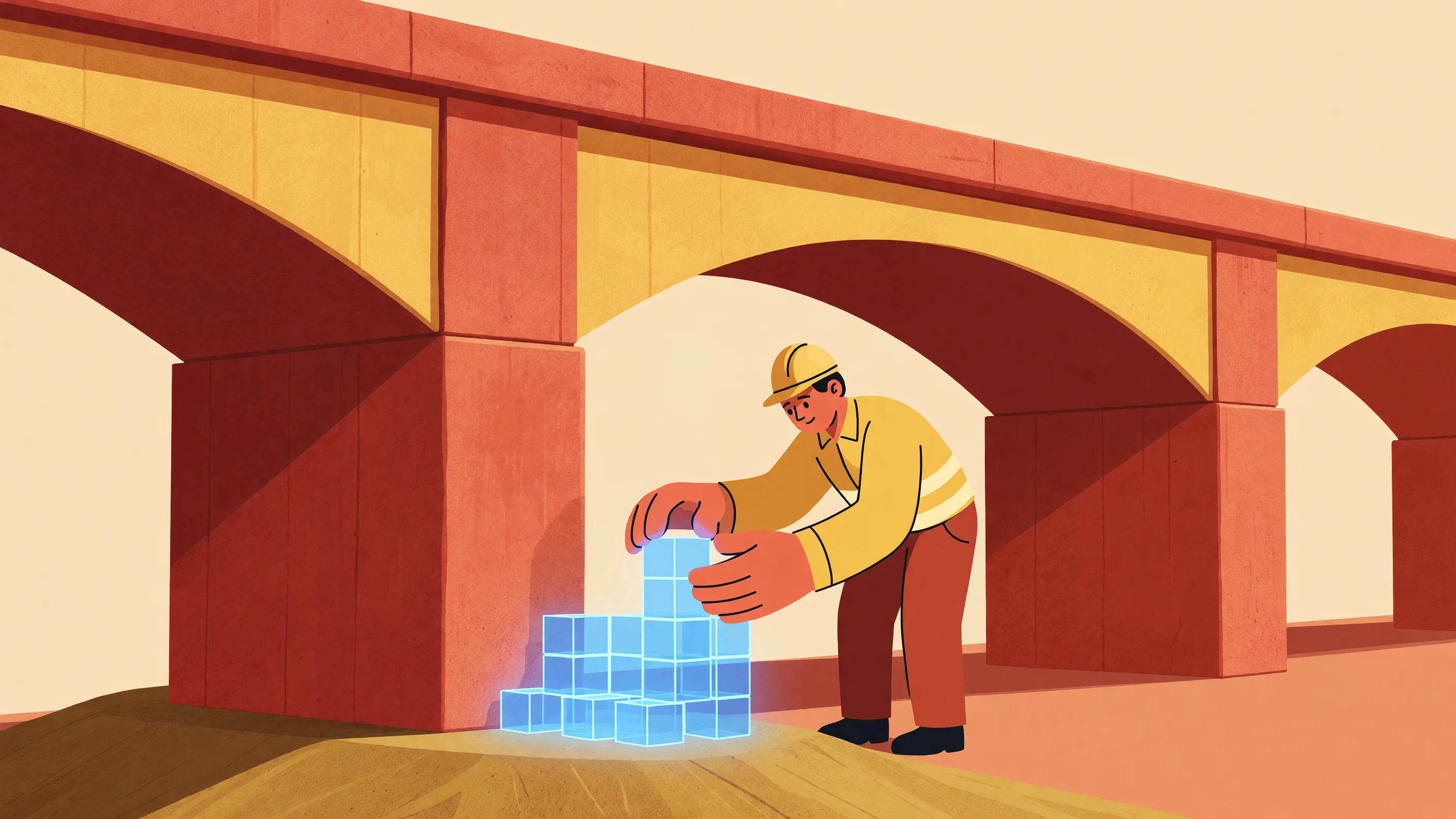
Concrete Foundations and Bridges of Bytes
The Government of Canada recently announced major investments to strengthen its physical infrastructure. Nearly 130 million dollars will be injected into restoring essential infrastructure and heritage assets at Parks Canada sites in Cape Breton and Canso, while significant funds are allocated to modernizing the water supply network in north Calgary. These decisions recall a fundamental truth: the sustainability and security of a society rely on the direct control of its public infrastructure. We would never agree to delegate the ownership or maintenance of our watermains and bridges to foreign private corporations subject to other jurisdictions.
Yet, a striking paradox remains. As soon as digital infrastructure is involved, this demand for autonomy vanishes. Public administrations, school boards, and municipalities entrust almost their entire informational nervous system to a handful of foreign tech giants. The data of our citizens and institutions transit and reside on servers governed by extraterritorial laws, such as the US Cloud Act. This dependency is no longer just an ethical issue; it constitutes a systemic vulnerability in the face of global geopolitical tensions and local regulatory requirements, notably Law 25 in Quebec.
Planned Obsolescence as a Tax on Public Services
This dependency manifests itself brutally through the lifecycle of computer hardware. Microsoft's announcement of the end of support for Windows 10 is forcing the renewal of entire fleets of computers. Thousands of perfectly functional computers in our schools and public administrations risk being discarded simply because they do not meet the arbitrary hardware requirements of Windows 11, such as the presence of a TPM 2.0 security chip or latest generation processors.
According to the Global E-waste Monitor report published by the United Nations Institute for Training and Research, global electronic waste production is increasing at an alarming rate, and the public sector is contributing to it against its will by submitting to the dictates of proprietary software publishers. This hardware waste represents a double penalty for taxpayers, who are forced to fund computer replacements that would technically not be necessary. The digital infrastructure of the state is thus subjected to a form of planned obsolescence dictated from the outside, running contrary to the principles of digital sobriety and sound management of public funds.
Redefining Infrastructure: From Operating System to Application
To rebuild true collective resilience, it is necessary to treat the IT systems of our organizations with the same rigour as our physical infrastructure. This requires an integrated approach at every level of the technology stack: the hardware, the application environment, and data governance.
It is precisely at this hardware junction that the Quebec alternative Boréal-OS is positioned. Rather than discarding computers deemed obsolete by tech giants, installing this sovereign, native operating system on the hard drive adds five to ten years of useful life to existing machines. Designed locally, without intrusive telemetry or background data collection, it eliminates reliance on foreign licences while guaranteeing rigorous security updates. By acting directly on the physical workstation, such a system transforms an environmental liability into a sustainable institutional asset.
Once the machine is secured at the hardware level, sovereignty must extend to the application level and information management. This is where the ProductivIA environment comes into its own, running directly in the browser without requiring complex local installations. The data generated and handled by users within the platform is centralized and governed within the Nuage application.
The Nuage application from ProductivIA embodies the principle of absolute transparency: every document, interaction, and user data point is accessible, auditable, and exportable in real time. Unlike proprietary cloud solutions that obscure physical location and file transfer flows, this compartmentalized management in local silos ensures strict compliance with Law 25. By combining a sovereign operating system on the ground with a transparent application environment in the cloud, public institutions can finally operate within a verifiable framework of trust.
Toward a Public Policy for Digital Commons
The transition to public interest digital infrastructure will not happen by simple decree, but through a paradigm shift. Administrations must stop viewing information technology as mere operating expenses or interchangeable commodity services. Software, operating systems, and databases are the highways and watermains of the 21st century.
Investing in sovereign, local, and sustainable solutions not only protects citizen privacy, but also stimulates our local knowledge economy. By extending the lifespan of physical hardware and ensuring the transparency of application data, Quebec and Canada have the opportunity to lay the foundations of true digital autonomy, as solid and durable as our greatest civil engineering works.