The Shadow of Wildfires and the Weight of Silicon
As wildfire smoke darkens North American skies, serving as a sharp reminder of climate change, every industrial sector is being confronted with its own responsibilities. The information technology sector, often perceived as virtual and weightless, faces an increasingly heavy environmental toll. Beyond the energy consumption of data centres, managing IT hardware now poses a major ecological challenge for public, educational, and private organizations.
Recent waves of air pollution recorded in major metropolitan areas, from Toronto to New York, illustrate the urgent need to transition to more sustainable practices. Yet, a silent crisis is looming in global IT fleets: planned software obsolescence, which threatens to turn millions of perfectly functional computers into premature electronic waste.
The Ecological Cost of Manufacturing: The Hidden Side of Hardware
To understand the environmental impact of IT, we must shift our focus from the usage phase to production. According to analyses by the French Agency for Ecological Transition (ADEME), nearly 80 percent of a personal computer's carbon footprint is generated before it is ever turned on, during the extraction of rare earth elements, component manufacturing, and transport.
Manufacturing a single machine requires hundreds of litres of water, complex chemicals, and a considerable amount of fossil fuels. Consequently, the most effective way to reduce the digital carbon footprint does not lie solely in optimizing algorithms or putting screens to sleep, but in extending the useful life of existing equipment. Adding five to ten years to a computer's lifespan cuts its overall lifecycle climate impact in half.
Forced Software Obsolescence: The Case of Windows 11
Despite this scientific evidence, decisions by major operating system developers often run counter to digital sustainability. The announcement of the end of support for Windows 10, combined with the strict hardware requirements of Windows 11, creates an artificial bottleneck. The requirement for a TPM 2.0 (Trusted Platform Module) security chip and recent-generation processors disqualifies millions of machines that are otherwise robust and fast.
A study published by the analyst firm Canalys estimates that nearly 240 million personal computers risk being discarded globally due to this software incompatibility. For Quebec school boards, municipalities, and SMEs, this situation translates into painful financial and ethical choices: committing to massive capital expenditures to replace functional hardware, or exposing themselves to major security vulnerabilities by keeping an obsolete operating system.
Boréal-OS and ProductivIA: Combining Hardware Sustainability and Application Sovereignty
It is precisely at the intersection of the ecological transition and technological independence that Quebec's sovereign ecosystem positions itself. Faced with the wall of forced upgrades, a concrete alternative lies in separating hardware from software through locally designed solutions.
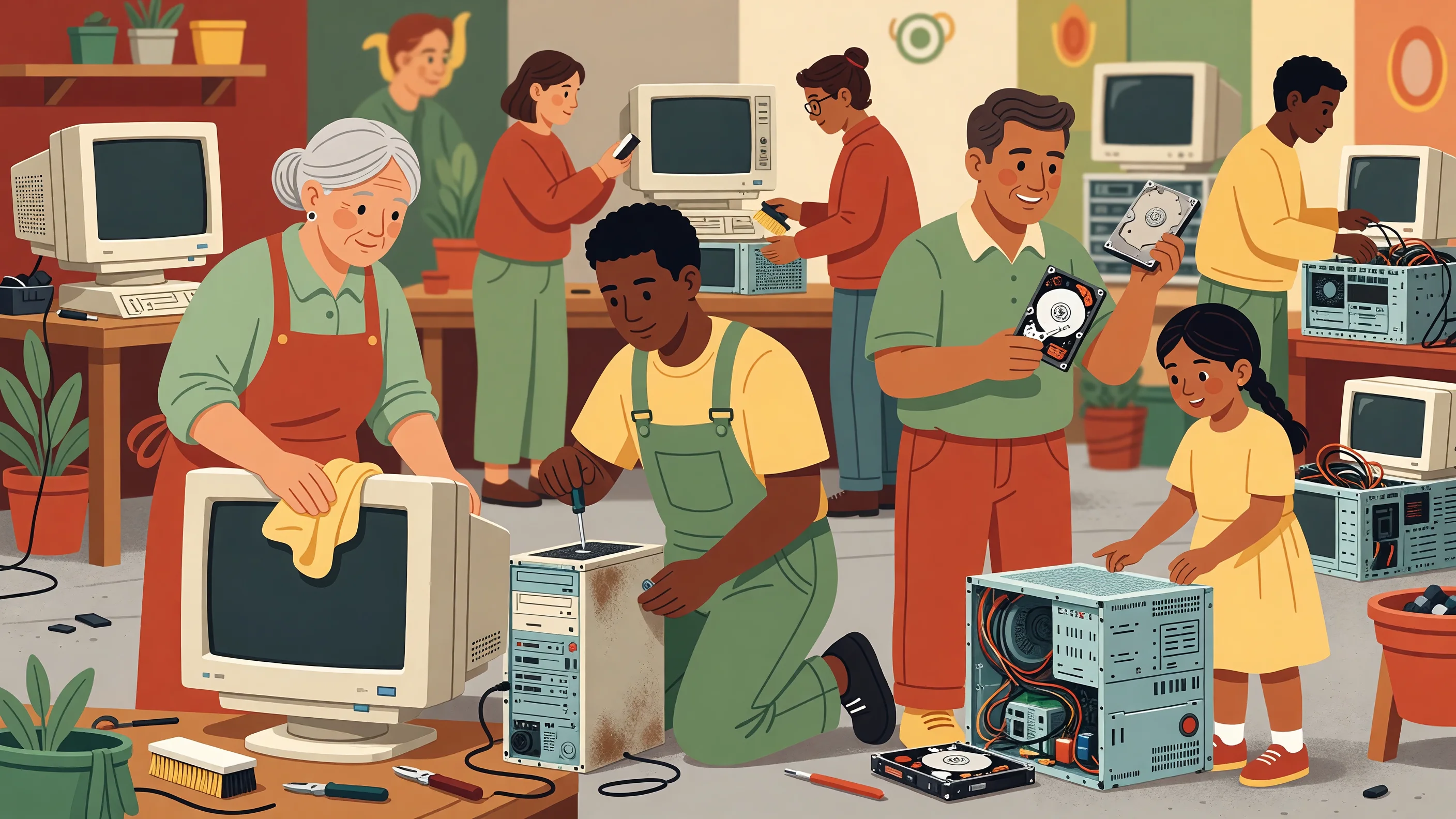
At the machine level, the native operating system Boréal-OS offers a direct response to planned obsolescence. By installing directly on the hard drive to replace proprietary systems, this Quebec-made Linux distribution breathes new life into computers declared obsolete by tech giants. Designed to be lightweight and secure, Boréal-OS runs smoothly on modest hardware configurations without requiring specific security chips or latest-generation processors. School and institutional IT fleets can thus extend their operations by five to ten years, avoiding the purchase of new machines and the waste of precious resources.
Once the machine is sustained by Boréal-OS, access to work tools is seamlessly achieved in the browser through the ProductivIA platform. This no-code application environment makes it possible to run complex productivity and artificial intelligence tasks without increasing the computer's local workload. The Nuage application, integrated into the platform, guarantees total transparency by allowing users to view, manage, and export their data stored on sovereign infrastructure hosted in Quebec.
This modular architecture demonstrates that it is possible to reconcile technological performance with environmental responsibility. Users benefit from a modern, secure application suite, while organizations control their costs and drastically reduce their carbon footprint by keeping their original equipment.
Toward Sustainable and Resilient IT
The climate crisis forces us to rethink our relationship with digital tools. The approach of systematically replacing hardware to adapt to increasingly demanding software is no longer sustainable. By adopting digital sustainability strategies based on reuse and software optimization, Quebec organizations can not only achieve substantial savings, but also actively participate in reducing global electronic waste. The transition to sustainable IT is not a technical constraint, but an opportunity to rebuild local, resilient infrastructure that respects planetary boundaries.