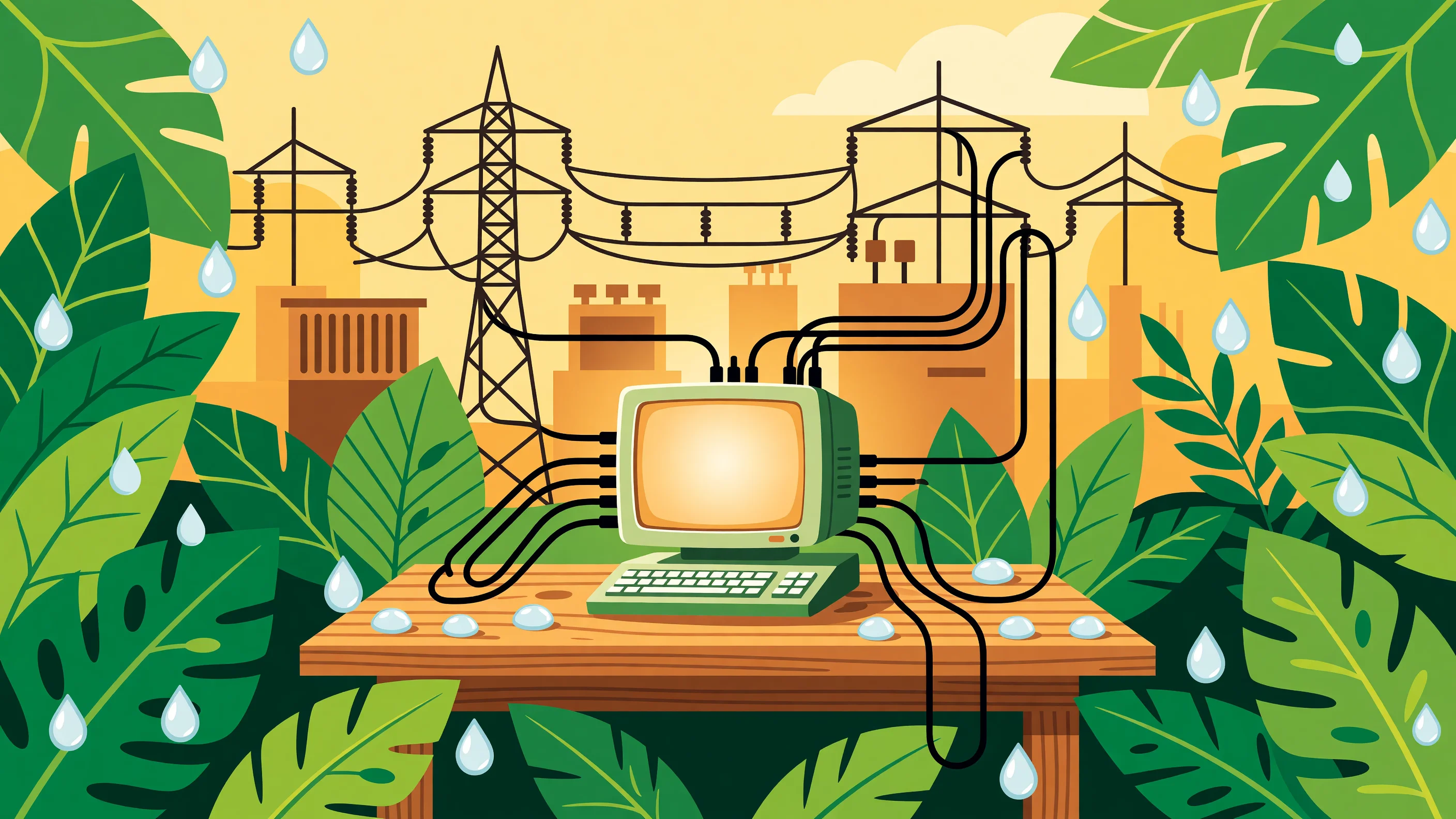
As power grid constraints force New York State to freeze data centre projects, AI decentralization is emerging as the only viable path forward. Governor Kathy Hochul signed a historic executive order imposing a one-year moratorium on the construction of any new data centre with a capacity of 50 megawatts or more. This decision, widely covered by specialized publications like Ars Technica and international media outlets like The Guardian, marks a sudden halt for the generative artificial intelligence industry, whose energy demands now threaten power grid stability and ratepayer utility bills.
New York State has thus become the first US jurisdiction to place a physical limit on the expansion of AI infrastructure. This moratorium aims to give regulators time to establish strict standards regarding environmental impact, water usage for cooling, and strain on the electrical distribution grid. The decision illustrates an unavoidable physical reality: the transition to artificial intelligence cannot come at the expense of basic natural resources.
The Energy Bottleneck of Giant Infrastructure
To understand the severity of this measure, one must grasp the scale of energy consumption by centralized infrastructure. According to a forward-looking report by the International Energy Agency (IEA), global electricity consumption by data centres could double by the end of the decade, surpassing the 1,000 terawatt-hour mark. A single query sent to a large language model consumes, on average, ten times more energy than a traditional web search.
High-performance computing servers, equipped with thousands of graphics processing units (GPUs), generate colossal amounts of heat that require millions of litres of drinking water for cooling. Furthermore, the concentration of these facilities in certain regions saturates local power transmission lines, sometimes forcing polluting thermal power plants to remain active to meet peak demand.
Faced with this bottleneck, the current model of "hyperscale" AI, where every calculation, even the most trivial, is sent to giant server farms located thousands of kilometres away, is showing its structural limits. Exclusive reliance on these centralized infrastructures not only raises sovereignty and security concerns, but has also become ecologically unsustainable in the long term.
Architectural Solutions: Decentralization and Local Execution
This global energy crisis highlights the relevance of a different architectural approach, one focused on efficiency and decentralization. The ProductivIA platform embodies this philosophy by offering concrete alternatives to the server-only model. Rather than systematically sending queries to energy-intensive infrastructure abroad, the platform prioritizes local execution and the intelligent orchestration of optimized models.
The Local AI application perfectly illustrates this paradigm shift. By leveraging the WebGPU standard, it runs language models directly in the user's browser, utilizing the processing power of their own machine. This approach completely eliminates network transit and server-side energy consumption for daily writing or analysis tasks. Computing takes place right at the user's fingertips, instantaneously and without impacting public power grids.
For tasks requiring greater computing power, the ProductivIA orchestrator allows for precise calibration of energy use. Thanks to the AI Comparator application, administrators can evaluate models not only on performance, but also on efficiency. Instead of using a giant model for a simple classification task, the platform routes the query to sovereign, mid-sized models like Matania. Hosted locally in Quebec, Matania is built on optimized architectures from the Qwen family, offering a performance-to-energy ratio far superior to the oversized, general-purpose models of American tech giants.
Toward Localized Computing
The New York State moratorium could well serve as a model for other jurisdictions facing similar energy strains. The question is no longer whether artificial intelligence will continue to grow, but how it will adapt to the physical limits of our planet. The transition from a centralized, opaque AI to a decentralized, local, and sovereign AI is no longer just an ethical or security option; it has become a physical necessity to ensure the sustainability of our digital tools.