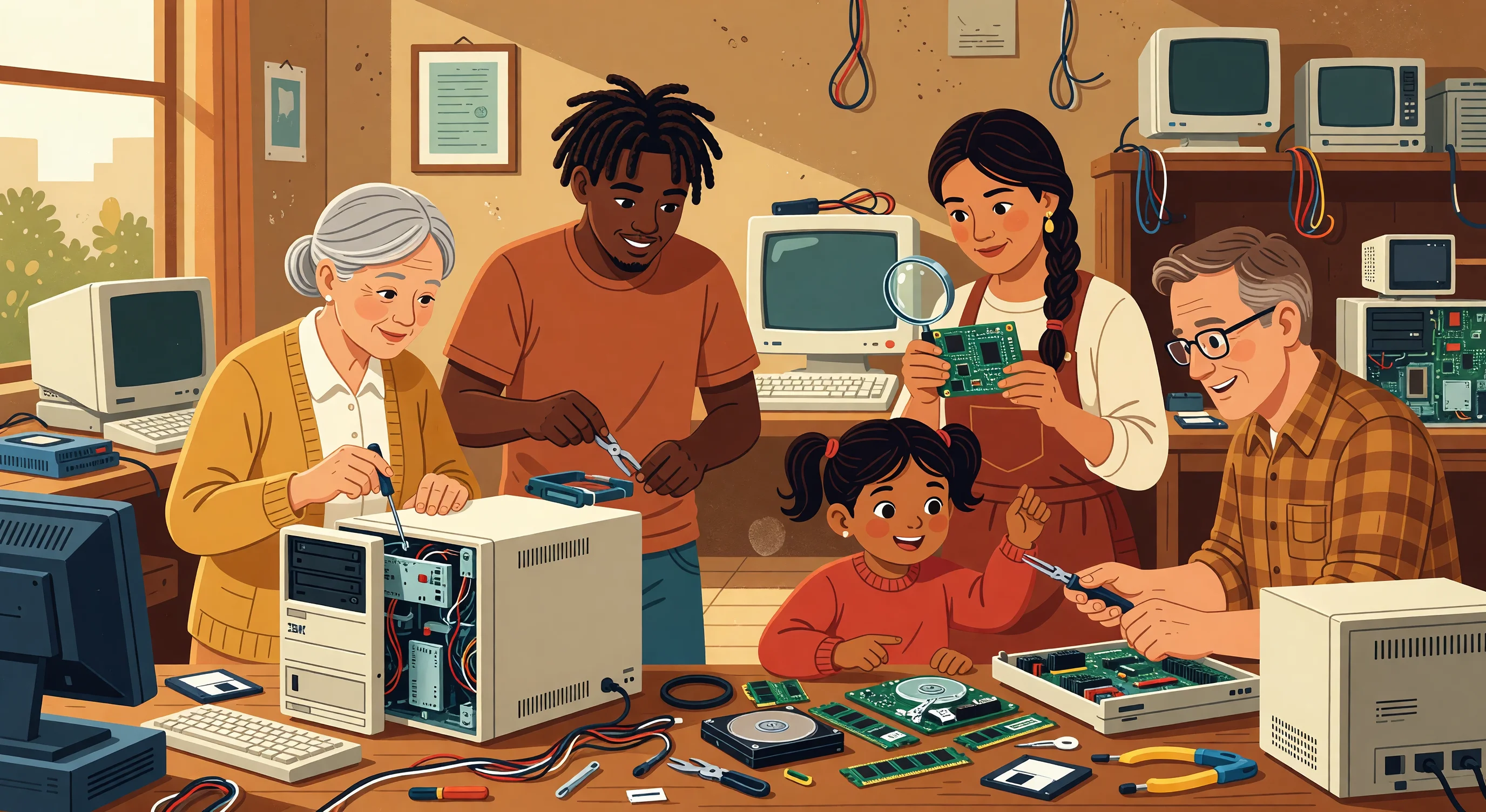
Exclusion by Code: The Chopping Block of Software Updates
When a simple software update condemns computer fleets that are still perfectly functional, digital sobriety requires separating the fate of the machine from that of its applications. Recently, successive announcements from tech giants have once again highlighted a well-known but highly problematic mechanism: forced software obsolescence. According to information reported by the specialized media outlet MacRumors, upcoming versions of Apple's operating systems will gradually drop compatibility with several computer models equipped with Intel processors, as well as older generations of tablets and phones.
This phenomenon is not unique to a single manufacturer. The desktop PC world faces a similar deadline with the announced end of support for Windows 10. The strict hardware requirements of its successor, notably the mandatory presence of a TPM 2.0 security chip and recent-generation processors, threaten to discard millions of machines that are otherwise fully capable of performing the vast majority of daily tasks. For businesses, schools, and individuals, this artificial barrier translates into a costly and technically unjustified requirement to upgrade.
The Ecological and Economic Impact of the Great Decommissioning
The premature discarding of functional computers has major environmental consequences. According to data published in the UN's Global E-waste Monitor, electronic waste production reaches record highs globally every year, and only a tiny fraction is properly recycled. Furthermore, studies by the French Agency for Ecological Transition (ADEME) consistently show that nearly 80 percent of a computer's carbon footprint is generated during its manufacturing phase. Extending the lifespan of a computer from five to ten years is therefore the most powerful lever to reduce the environmental impact of digital technology.
On the economic front, this software-driven planned obsolescence places an unsustainable financial burden on public institutions, particularly the Quebec school system, and on small businesses. Having to replace dozens or hundreds of still-fast computers simply because a software publisher refuses to support them represents a waste of public funds and corporate resources that could be avoided through a different technological approach.
Decoupling Machine and Software: The Path to Sobriety
To counter this systematic exclusion, a conceptual shift is required: we must decouple hardware infrastructure from the application environment. Traditionally, users depend on a heavy, locally installed operating system that dictates which applications can be run. If the operating system declares the machine obsolete, access to modern work tools is cut off.
The solution lies in transitioning to lightweight operating systems designed to maximize the use of existing resources, combined with application environments hosted in the web browser. By offloading complexity and heavy processing to servers or optimizing local execution via open web standards, a ten-year-old machine can offer the same fluidity and functionality as a brand-new device. This approach redefines the very notion of computer performance: it is no longer the raw power of the local processor that matters, but rather the machine's ability to run a modern, secure browser.
The Sovereign Alternative: Revitalizing Hardware with Boréal-OS and ProductivIA
It is precisely at this intersection that the sovereign Quebec ecosystem is deployed, structured to offer a comprehensive response to hardware obsolescence. The first layer of this stack is Boréal-OS, a sovereign operating system natively designed in Quebec. By installing directly on the hard drive to replace proprietary systems, this lightweight Linux distribution bypasses artificial constraints like TPM chip requirements or recent processors. It instantly gives a second useful life to computers declared obsolete, guaranteeing their security through regular updates without requiring hardware repurchases.
Once the machine is rehabilitated by Boréal-OS, access to modern productivity tools is provided via the second layer: the ProductivIA application platform, accessible directly from the browser. This no-code architecture eliminates the need to install heavy software locally. Two applications on the platform illustrate this synergy particularly well:
- Nuage: This transparent cloud storage application allows users to view, organize, and export all their data. Files reside on the secure infrastructure of the silo, freeing up local disk space and guaranteeing total data portability, in full compliance with Quebec's Law 25.
- L'Assistant: This central agent orchestrates the platform's various applications through simple natural language dialogue. Instead of taxing the computer's hardware resources to run complex tasks or artificial intelligence models, L'Assistant handles these requests server-side. AI computations are thus offloaded, allowing an older computer to access the most advanced technologies without slowing down.
By pairing these tools with the sovereign AI engine Matania, which processes requests locally in Quebec, organizations ensure that their data never transits through foreign infrastructures subject to extraterritorial laws. This complete technology stack demonstrates that it is possible to reconcile data sovereignty, modern applications, and hardware conservation.
Going Further
The transition to decoupled computing models raises fundamental questions about the governance of our public infrastructure. As right-to-repair regulations advance globally, will Quebec institutions seize the opportunity of hardware reclamation to break free from dependency on proprietary publishers? The economic and ecological viability of our organizations in the era of artificial intelligence will depend heavily on our ability to make our physical equipment last while modernizing our software environments.