Climate Sidelined on the International Agenda
The G7 summit that opened in Évian-les-Bains, in the French Alps, marks a worrying turning point for global environmental policies. According to reports by the daily newspaper Le Monde and the ecological investigative media outlet Reporterre, issues related to the fight against climate change were deliberately excluded from the main discussions. This diplomatic decision, made to avoid friction with Donald Trump's US administration, illustrates a form of apathy among major powers in the face of the ecological emergency, in favour of geopolitical negotiations and spectacular announcements.
While the spotlight shines on Middle East peace agreements and celebrations surrounding the US president's 80th birthday, the climate crisis has been relegated to the background. This disengagement by multilateral bodies serves as a reminder that macroeconomic decisions struggle to integrate planetary boundaries. In the face of this political capitulation, the need to develop local, concrete, and immediately applicable alternatives is becoming a priority for organizations and citizens concerned about their environmental footprint.
The Hidden Footprint of Hardware: The Real Ecological Challenge
To understand the environmental impact of digital technology, we must look beyond the myth of dematerialization. Manufacturing IT equipment, such as computers, servers, and smartphones, represents the heaviest part of their ecological footprint. According to a joint report by ADEME and Arcep on the environmental footprint of digital technology, between 70% and 80% of the environmental impacts of devices are generated during their manufacturing phase, long before they are ever turned on. The extraction of rare earth elements, water consumption, and the energy required to produce complex electronic chips carry an exorbitant ecological cost.
Compounding this burden is the phenomenon of forced software obsolescence. The announcement of the end of support for widely used operating systems, combined with strict hardware requirements for new versions, such as the mandatory presence of a TPM 2.0 chip or secure boot, threatens to render millions of perfectly functional computers unusable. For school, municipal, or corporate computer fleets, these technical decisions imposed by tech giants lead to waves of forced replacement and massive electronic waste, directly contradicting greenhouse gas reduction targets.
Boréal-OS and ProductivIA: Hardware and Software Sovereignty
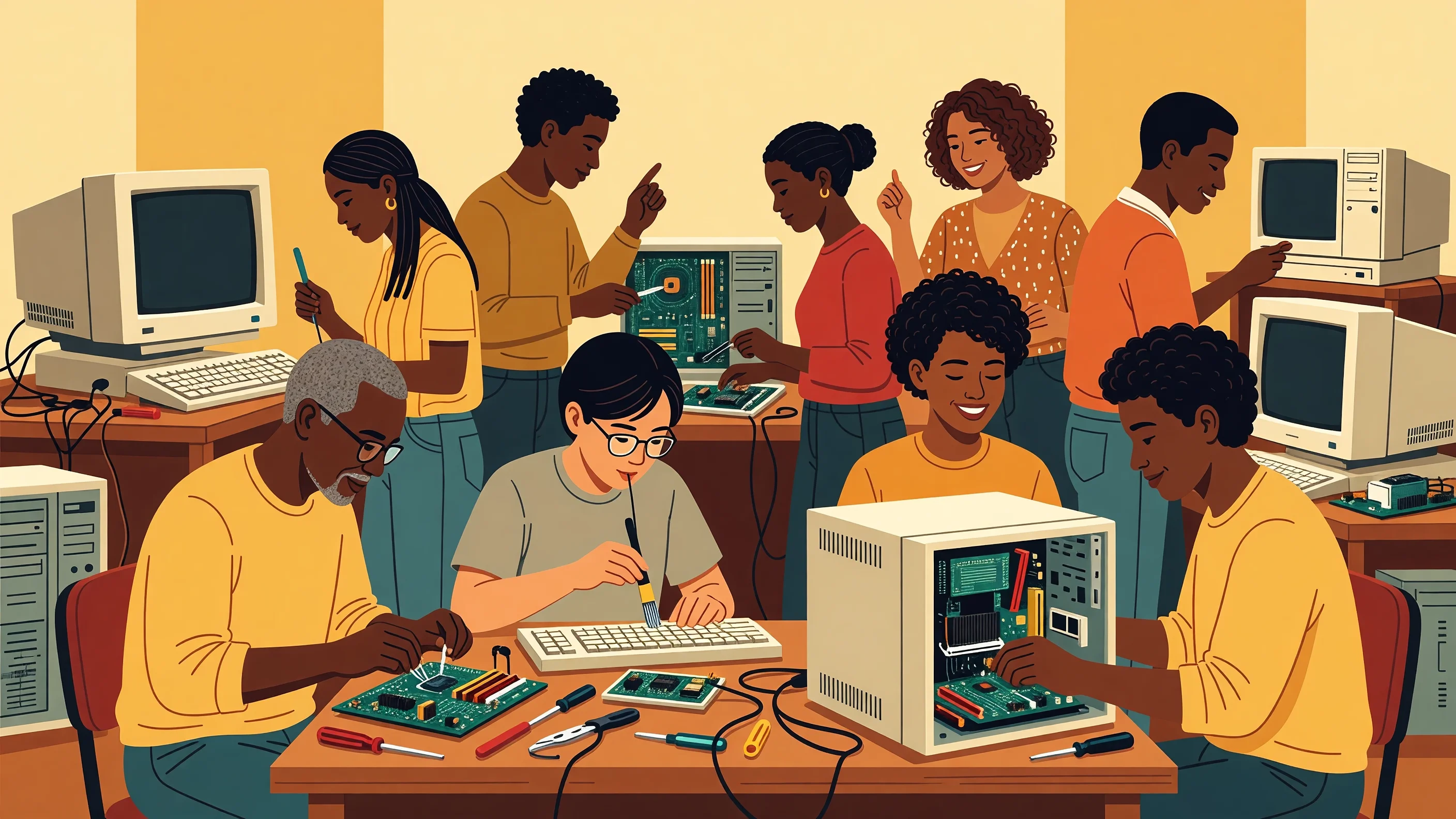
The sovereign Quebec ecosystem positions itself precisely at the intersection of hardware preservation and application autonomy. In response to planned obsolescence, the native operating system Boréal-OS offers a rigorous technical solution. By installing directly on the hard drives of machines declared obsolete by proprietary software publishers, this lightweight and secure Linux distribution extends the useful life of existing computers by five to ten years. It eliminates the need to purchase new hardware, which is the most powerful lever an organization has to reduce its carbon footprint.
Once a machine is revitalized by Boréal-OS, access to work tools is seamless and modern. The ProductivIA application platform runs entirely in the web browser, meaning it does not overload local computing resources. A school or municipality can thus transform a fleet of old PCs into high-performing workstations capable of accessing artificial intelligence or document management applications without requiring latest-generation processors.
This approach is complemented by ProductivIA's Nuage application, which offers transparent and structured cloud storage. Unlike the opaque architectures of major providers that rely on energy-intensive, transborder data transfers, Nuage keeps and accesses files within a secure silo located in Quebec. This localized management promotes digital sobriety by avoiding unnecessary data duplication and limiting network requests to distant servers, while ensuring strict compliance with Law 25 on the protection of personal information.
Toward Technological and Environmental Autonomy
The sidelining of climate issues by G7 leaders demonstrates that the ecological transition cannot rely solely on top-down international treaties. It must be reflected in daily technological choices focused on circularity, durability, and sobriety. Extending the lifespan of a computer through a free and sovereign operating system like Boréal-OS is no longer just a rational budget decision; it is an act of environmental responsibility.
Public institutions, the education network, and Quebec businesses now have the tools to build a dignified and sober digital infrastructure. By decoupling software power from the need for new hardware, the Quebec ecosystem proves that it is possible to reconcile technological innovation with our planet's ecological limits. The question is no longer when governments will act, but how organizations can adopt more responsible digital practices today.