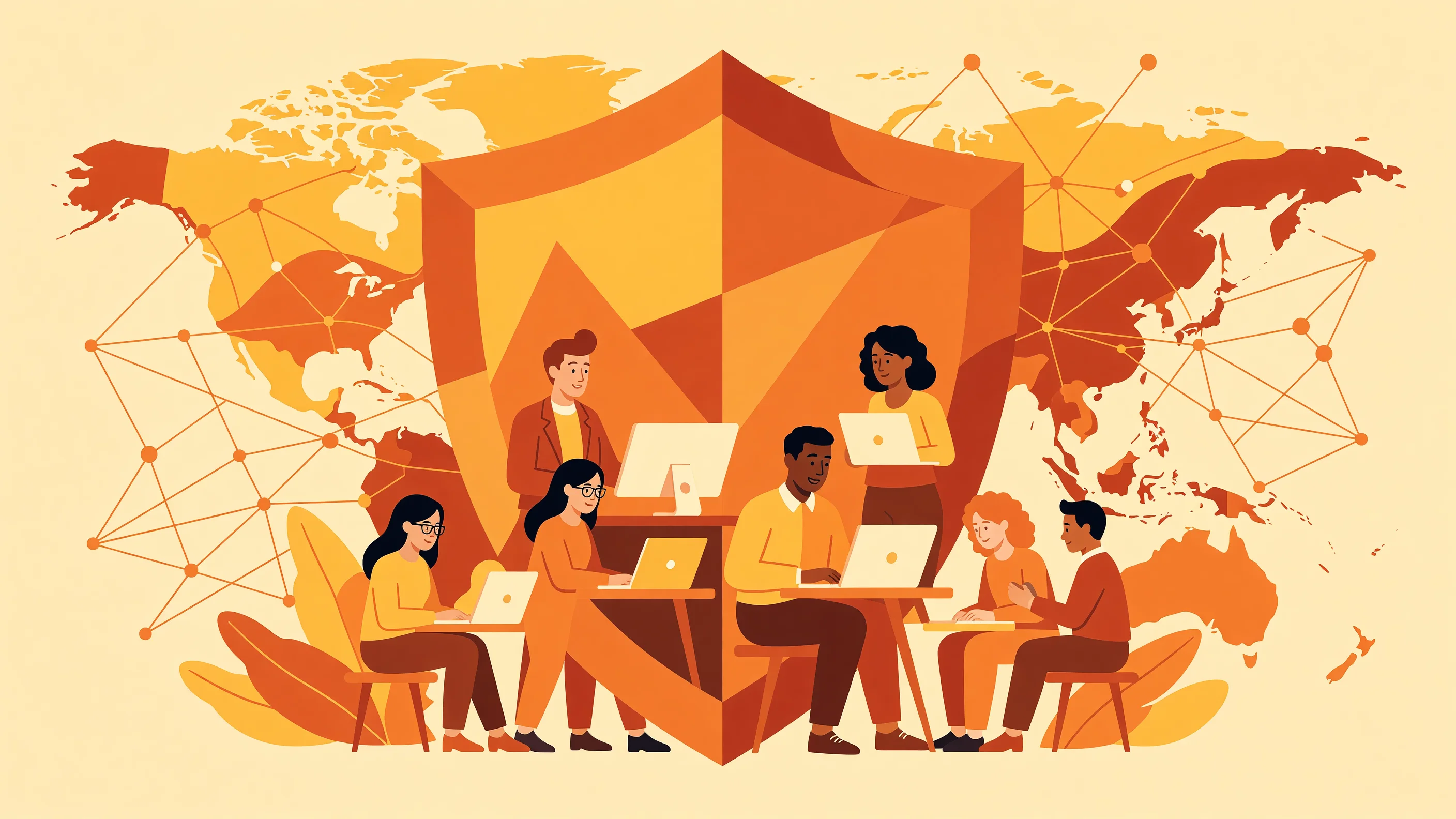
A Climate of Commercial and Technological Distrust
As commercial trust erodes between Canada and the United States, technological dependence on American hyperscalers is shifting from a matter of convenience to a national security risk. Recent political tensions, marked by threats of unilateral tariffs and tight negotiations in Washington, highlight the fragility of cross-border agreements. According to a Pew Research Center survey, shared by the British daily newspaper The Independent, barely 35% of Canadians now consider the United States to be a reliable partner in the long term.
This crisis of confidence goes far beyond the exchange of consumer goods or natural resources. It directly affects the invisible infrastructure on which the modern economy rests: data storage, operating systems, and artificial intelligence engines. For Canadian public institutions and businesses, entrusting their entire information assets to entities subject to the laws of a neighbouring state is no longer just a technical choice; it is a major strategic vulnerability.
Extraterritoriality of Law and the Risk of Disruption
To understand the nature of this risk, it is necessary to analyze the legal mechanisms governing data stored in the cloud. The USA CLOUD Act (Clarifying Lawful Overseas Use of Data Act) allows American judicial authorities to compel US-based technology service providers to disclose their users' data, regardless of the physical location of the servers. In practice, a Quebec company hosting its data on an American infrastructure located in Montreal remains exposed to extraterritorial access requests, bypassing the local protections of Law 25 on the protection of personal information.
Beyond confidentiality, the risk of service interruption or unilateral modification of access conditions is very real. As the recent history of information technology has shown, the concentration of infrastructure among a small number of players creates a single point of failure. Whether due to a political decision, a trade dispute, or a strategy shift by a web giant, an organization can find itself deprived of its work tools overnight. Dependence on proprietary architectures thus exposes institutions to technological lock-in that is difficult to reverse.
The Response Through the Sovereign Quebec Stack
Faced with this vulnerability, the solution does not lie in simple contractual clauses, but in a redesign of the technical architecture. This is where the complementarity of Quebec's sovereign ecosystem makes full sense, offering a secure alternative structured into three independent and complementary levels: the machine, the application, and the intelligence.
At the hardware level, the native Boréal-OS operating system frees physical computers from the telemetry and forced update requirements of commercial American systems. By installing this Quebec Linux distribution directly on the hard drive, organizations ensure total control over the workstation while extending the useful life of their computer fleet.
At the application level, the ProductivIA platform runs directly in the browser, eliminating the need to install third-party software or maintain complex dependencies. The ProductivIA Nuage application embodies this philosophy of transparency: it offers a fully controllable storage space where each user file is visible, exportable, and hosted locally in Quebec. Users know exactly where their data lives, without black boxes or cross-border transfers.
For artificial intelligence needs, the GoIA application allows users to interact with various language models while avoiding vendor lock-in. Thanks to its orchestration architecture, administrators can configure the platform to direct sensitive queries exclusively to the sovereign Matania model, physically hosted in Quebec. If an American provider changes its pricing or restricts access, the platform seamlessly switches to the local infrastructure without requiring any changes to the application code.
Towards Sustainable Operational Autonomy
Digital sovereignty is not a form of isolationism, but a basic precautionary measure in an unstable, multipolar world. By decoupling hardware, the application environment, and artificial intelligence engines, Quebec's public and private organizations are equipping themselves with a shield against external geopolitical pressures. It remains to be seen whether institutional decision-makers will accelerate the transition to these local infrastructures before the next trade crisis disrupts their daily operations.