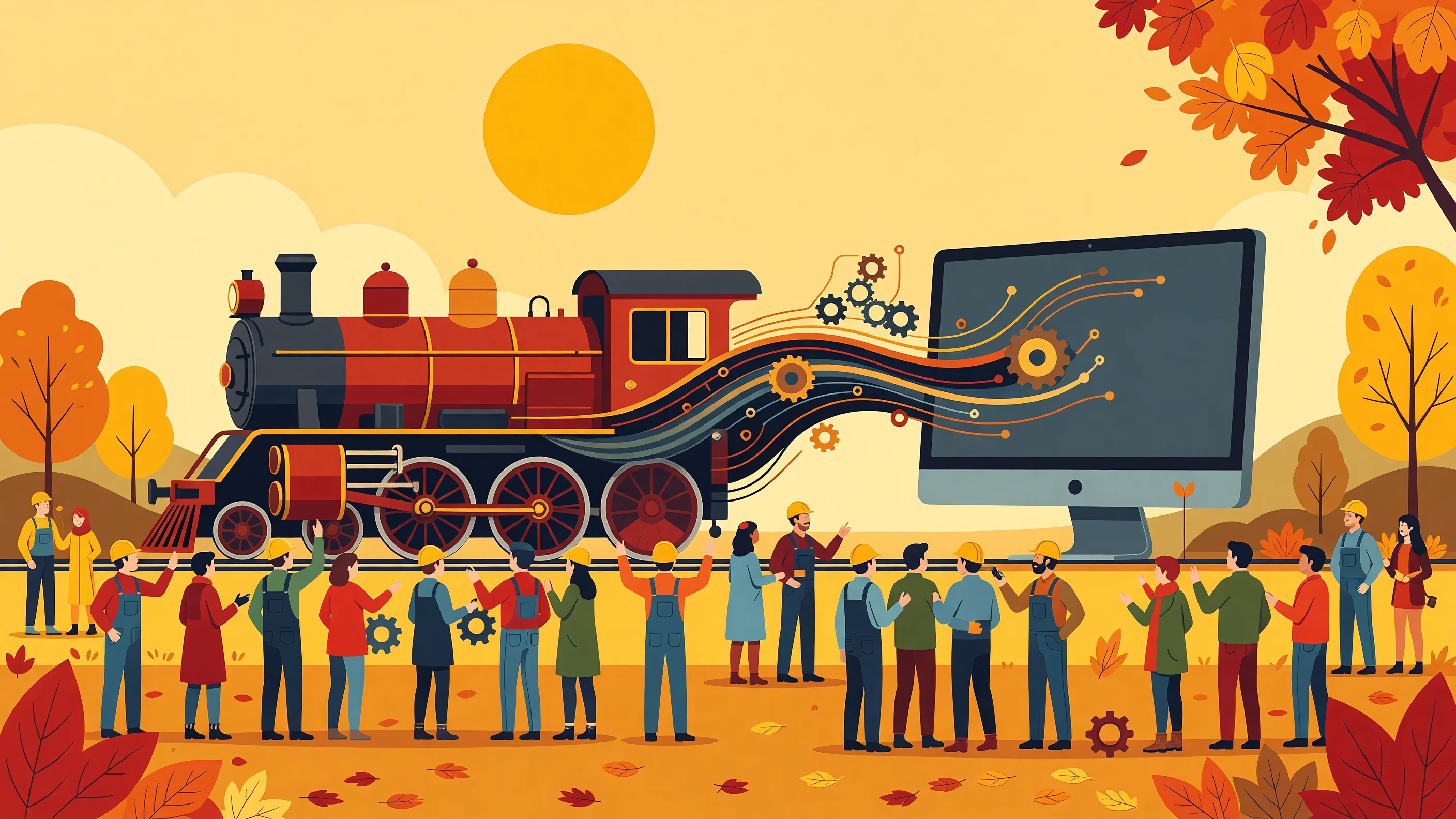
The Remarkable Longevity of VIA Rail's Fleet
The announcement made waves in the transportation sector: multinational Alstom has won a major three billion euro contract (approximately 4.5 billion Canadian dollars) to replace 313 VIA Rail Canada passenger cars. These stainless steel cars, originally built by the Budd Company, first entered service in 1947. They have been running on the Canadian rail network for 77 years. This historic milestone is a reminder that quality engineering, combined with rigorous maintenance and successive upgrades, can defy the passing of decades.
This industrial achievement raises a fundamental question: if public transit infrastructure can endure for generations through careful maintenance, why do we accept discarding our computers after only five to eight years of use?
The Paradox of Forced Software Obsolescence
While physical durability remains a key objective in transportation, the information technology industry seems to be heading in the opposite direction. Microsoft's announcement of the end of support for Windows 10 illustrates this disconnect. The strict technical requirements for Windows 11, particularly the mandatory TPM 2.0 security chip and recent processors, threaten to render millions of perfectly functional devices obsolete.
According to a study by technology analysis firm Canalys, this forced software transition could send nearly 240 million personal computers to landfills worldwide. This staggering estimate is part of a broader electronic waste crisis. The Global E-waste Monitor, published under the auspices of the United Nations Institute for Training and Research (UNITAR), reveals that electronic waste generation is growing five times faster than documented recycling of these devices.
The carbon footprint of the digital sector lies mostly in the manufacturing stage of the hardware: extracting rare earth elements, refining metals, and assembling printed circuit boards consume a colossal amount of energy. Extending the useful life of an existing computer by an additional five years is infinitely more beneficial for the environment than any software optimization or data centre carbon neutrality promise.
Boréal-OS: Tackling Hardware Obsolescence at the Source
This is precisely where Quebec's sovereign ecosystem comes into play. Faced with software obsolescence dictated by tech giants, the response must not be limited to applications; it must be anchored in the physical operating system of the machine.
Boréal-OS, a sovereign native operating system designed in Quebec as a lightweight Linux distribution, positions itself as a shield against this systemic waste. By installing directly onto the hard drives of computers declared obsolete by proprietary commercial systems, Boréal-OS bypasses artificial restrictions such as TPM 2.0 or Secure Boot requirements.
Even machines with modest specifications regain remarkable responsiveness and fluidity. Boréal-OS eliminates the intrusive telemetry and superfluous background processes that clutter the RAM of modern computers. As a result, school or corporate IT fleets can extend their useful life by five to ten years, avoiding massive procurement expenses and the disposal of tons of electronic components into the environment.
ProductivIA, ia-locale, and Nuage: Efficiency at the Heart of the Browser
Once the physical machine is preserved by Boréal-OS, the ProductivIA application environment takes over directly inside the web browser, eliminating the need to install heavy, resource-intensive software.
Among the hundred tools available on the platform, the ia-locale application embodies this philosophy of digital sobriety. Thanks to the modern WebGPU standard, it can run complex language models directly on the user's local graphics card within the browser. No data transfer to third-party servers is required. Users can benefit from the computational power of artificial intelligence without having to purchase an expensive high-end computer or send their queries abroad, ensuring natural compliance with the requirements of Quebec's Law 25 on personal information protection.
Similarly, ProductivIA's Nuage application offers absolute transparency regarding file storage. Unlike the opaque cloud computing solutions of American tech giants, Nuage allows users to see exactly where their data resides within their organization's silo. This approach guarantees total data portability and eliminates vendor lock-in.
Toward Digital Sobriety in Infrastructure
Sustainability is not a simple technical feature; it is an architectural choice. Just as VIA Rail has kept its fleet in service for over seven decades through rigorous maintenance, public and private organizations in Quebec now have the opportunity to rethink their IT infrastructure.
Combining Boréal-OS at the hardware level with ProductivIA at the application level demonstrates that it is possible to reconcile technological progress with environmental sobriety. By freeing workstations from forced replacement requirements, this ecosystem offers a model of digital resilience that can be applied to institutions, businesses, and citizens alike.